
How Many Auricular Acupuncture Sessions Do You Need?
- ByRavinder Singh Sahota
- November 20, 2026
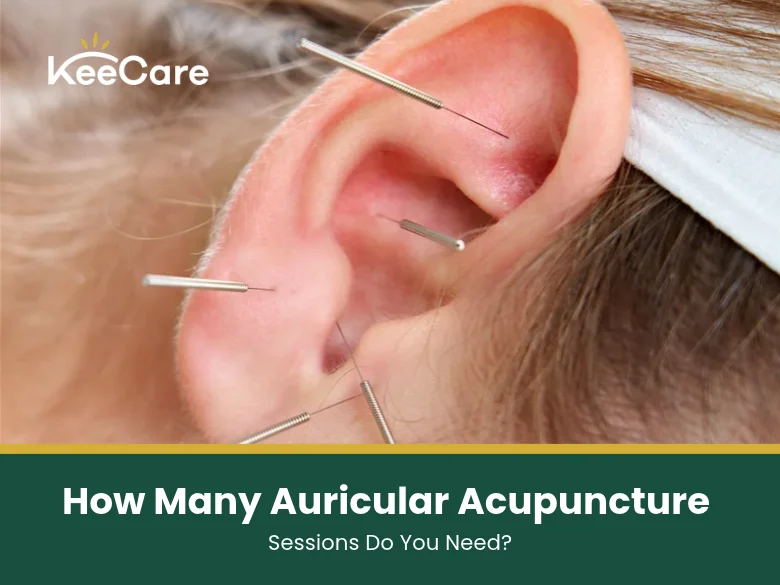
One of the most common questions before a first appointment is how many sessions of auricular acupuncture you might need. The honest answer is that it varies, and that variation is not a limitation of the therapy but a reflection of the fact that people, their concerns and their responses to treatment genuinely differ. Some clients notice a consistent effect within two or three sessions; others benefit from a longer course.
This guide explains what shapes the answer, covering the distinction between acute and long-standing concerns, how structured protocols for specific goals such as smoking cessation work differently from general wellbeing support, and what a typical course looks like from a first appointment through to review and discharge. It also covers how to assess whether auricular therapy is having a noticeable effect and when occasional maintenance sessions might be appropriate.
At KeeCare in Upper Norwood, London, Ravinder Singh Sahota is a Registered Comprehensive Auricular Acupuncturist and member of the CNHC and The Acupuncture Society. His approach to auricular acupuncture considers each client’s concerns, health background and goals individually rather than following a standard programme, drawing on Chinese, Ayurvedic and French auricular traditions alongside Battlefield Acupuncture.
Key Takeaways
- There is no universal session number: The number of auricular acupuncture sessions that may be appropriate depends on the individual concern, its duration and how the person responds to auricular stimulation.
- Acute concerns may respond more quickly: Short-term or recent concerns such as mild stress or acute discomfort may show a noticeable response within two to four sessions for some clients, though results vary.
- Chronic or long-standing concerns typically require a longer course: Persistent pain, long-term anxiety or ongoing hormonal symptoms are generally explored across six sessions or more to assess effect.
- Structured protocols exist for specific goals: Smoking cessation, for example, often follows a defined auricular protocol with specific points and scheduled sessions over a set period of weeks.
- Individual responses differ: Two people with the same concern, treated with the same auricular points, can have very different experiences of how quickly or consistently they notice an effect.
- Ear seeds can extend auricular stimulation between sessions: Where ear seeds are used as part of an appointment, they may provide continued point stimulation in the days following a session.
- A first session includes an assessment: The initial appointment focuses on understanding your concerns, health background and goals, which the practitioner uses to recommend an appropriate course.
- Auricular acupuncture is a complementary approach: However many sessions are explored, auricular therapy supports but does not replace appropriate medical diagnosis, treatment or professional healthcare advice.
Why Is There No Fixed Number Of Auricular Acupuncture Sessions?
Auricular acupuncture works by stimulating specific reflex points on the outer ear, understood within auricular acupuncture systems to correspond to different areas and functions of the body. How the body responds to that stimulation varies from one person to the next, and the nature of the concern being explored plays a central role in how many sessions may be appropriate.
A person exploring auricular therapy for recent stress following a difficult period may find a short course of three or four sessions sufficient to notice a meaningful shift. The same number of sessions would be unlikely to address persistent lower back pain that has been present for several years. The duration and complexity of the concern, combined with the individual’s response, make a universal session number impractical to state.
This is not unusual in complementary therapy generally. Physiotherapy, talking therapy and many other approaches work in courses rather than to a fixed count, with the right length depending on the individual. Auricular acupuncture follows the same logic.
What Factors Affect How Many Sessions You May Need?
Several practical factors shape a realistic answer to this question.
Nature Of The Concern
Short-term concerns that have arisen recently or in response to a specific event tend to respond more quickly than those with a longer history. A concern that has persisted for months or years often benefits from a more sustained course.
Duration
The longer a concern has been present, the more time is typically needed to assess whether auricular therapy is having a meaningful effect and to build on initial results.
Individual Response
The same auricular points, applied by the same practitioner, can produce markedly different experiences from one person to the next. Some people are more responsive to auricular stimulation; others need more sessions before a consistent pattern of response becomes apparent.
The Practitioner's Assessment
At an initial consultation, the practitioner considers the client’s full health background, current concerns and priorities. This informs whether a short exploratory course or a more sustained approach is recommended.
Use Of Ear Seeds Between Sessions
Where ear seeds are incorporated into sessions, they may extend the stimulation period between appointments. This can influence how many in-clinic sessions are needed over the course of a plan. As with any adhesive-backed product applied to the skin, there is a small possibility of local irritation with ear seeds, and clients should let the practitioner know if this occurs.
Concurrent Treatments And Health Background
People who are also receiving conventional medical treatment, physiotherapy or other complementary therapies may find that those parallel approaches influence how their body responds to auricular stimulation.
How Many Sessions Do People Typically Explore For Different Concerns?
The table below sets out approximate session ranges that are commonly discussed in the context of auricular acupuncture. These are general guides rather than predictions, and individual responses can differ significantly.
| Concern or Goal | Typical Session Range | Additional Notes |
|---|---|---|
| Recent or acute stress | 2 to 4 sessions | Individual responses vary; some clients notice an effect sooner |
| Smoking cessation | 4 to 6 sessions (structured protocol) | May include an intensive first week; sessions spaced over 4 to 6 weeks |
| Persistent musculoskeletal discomfort | 6 to 10 sessions | Long-standing concerns generally require a longer course |
| Headaches and tension headaches | 4 to 6 sessions | Frequency and severity of episodes inform session planning |
| Ongoing stress and anxiety support | 4 to 8 sessions | Maintenance sessions are common once an initial course is complete |
| Women's wellbeing and hormonal concerns | 6+ sessions | Explored alongside appropriate conventional healthcare |
| General relaxation and wellbeing | 4 to 6 sessions | Some clients continue with occasional maintenance sessions afterwards |
| Addiction support (alongside services) | Varies; structured protocol where applicable | The NADA protocol is one structured model; always used alongside appropriate professional services |
No range in the table represents a guarantee of outcome. For concerns involving significant or persistent symptoms, an appropriate healthcare assessment should come first. Auricular acupuncture is a complementary approach and is explored alongside, not instead of, relevant conventional care.
What Does A Course Of Auricular Acupuncture Look Like?
For most clients, a course begins with an initial consultation that also serves as a first treatment. The practitioner takes a detailed health background, discusses current concerns and goals, and selects specific auricular points based on that assessment. Fine sterile needles, ASP semi-permanent needles or ear seeds are then applied to those selected points.
A progress review is typically included at the second or third session to assess whether the approach is having a noticeable effect and whether the point selection needs to be adjusted. At KeeCare, this is a standard part of the process rather than an optional extra.
After the initial course, most clients either complete the intended course and discharge, choose occasional maintenance sessions to support continued wellbeing, or extend the course if their primary concern has not fully resolved. The practitioner will discuss which direction makes most sense based on how the course has progressed.
Thinking about whether auricular acupuncture may be appropriate for what you are experiencing?
Our team offers a free 30-minute initial consultation to discuss your concerns and what a realistic course might look like.
How Often Should Sessions Be Scheduled?
Session spacing depends on the concern and the practitioner’s recommended approach, but a weekly or fortnightly schedule is the most common starting point for a focused course. For some concerns, particularly those where maintaining consistency of auricular stimulation is important, a weekly schedule over the first several sessions is preferred.
As the course progresses and a stable response is established, sessions may be spaced further apart. This is a natural progression in the course rather than a sign that treatment is winding down. The final sessions of a course are often fortnightly or monthly.
Ear seeds, where used, play a practical role in session spacing. Because they remain in place for several days after an appointment, they can maintain point stimulation between sessions and may allow for slightly longer intervals between in-clinic appointments.
What Is Different About A First Session Compared With A Follow-up?
The structure and focus of a first appointment differ meaningfully from a follow-up, and clients often find it helpful to understand what changes.
| Aspect | First Session | Follow-up Session |
|---|---|---|
| Duration | Typically 45 to 60 minutes | Often 30 to 45 minutes |
| Focus | Consultation, assessment and initial treatment | Ongoing treatment informed by previous response |
| Assessment depth | Detailed health background and concerns discussed | Progress review and point selection adjusted if needed |
| Point selection | Based on initial consultation | Refined based on how previous sessions were experienced |
| Method | Method of stimulation discussed and agreed | Continuation or adjustment based on experience to date |
| Aftercare guidance | Full explanation of what to expect between sessions | Updates based on experience since the last session |
The key difference is that a first session involves gathering detailed information before treatment begins, whereas follow-up sessions build directly on what happened previously. The assessment at a follow-up is typically focused on progress rather than starting from scratch.
Not sure what your first appointment at KeeCare would involve or how many sessions might suit your situation?
Our practitioner can walk you through the process during a free initial consultation. Get in touch at keecare to arrange yours.
How Do You Know If Auricular Acupuncture Is Having An Effect?
This is a genuinely practical question, and one that the practitioner will usually return to at a progress review. There is no single marker that indicates auricular therapy is working, partly because the experience varies by concern and by individual.
Some clients report feeling noticeably more relaxed immediately after a first session, with that effect becoming more consistent across subsequent sessions. For concerns such as ongoing stress or tension, a gradual reduction in the intensity or frequency of symptoms is a more realistic marker than an immediate resolution.
For longer-standing concerns such as persistent discomfort or disrupted sleep, the practitioner will typically ask about changes since the previous session, noting whether symptoms have shifted, whether sleep has improved or whether general wellbeing has changed. These conversational reviews are part of the ongoing assessment rather than a formal scoring process.
Where no meaningful effect has been noticed after a reasonable number of sessions, an honest discussion about whether to continue, adjust the approach or explore a different complementary therapy is appropriate. A practitioner should not simply recommend extending a course without clear reason.
What About Structured Protocols For Specific Goals?
For some concerns, auricular acupuncture is delivered as part of a structured protocol rather than an open-ended course. The best-known examples are smoking cessation and the NADA protocol for addiction support.
Smoking cessation using auricular acupuncture typically targets specific points, including the Lung point, the Mouth point and the Shen Men point, in sessions spaced at defined intervals. Some protocols involve an intensive initial period of two or three sessions in the first week, followed by weekly sessions over the following four to six weeks. The exact structure depends on the protocol being followed and the client’s specific situation.
The NADA (National Acupuncture Detoxification Association) protocol uses five specific auricular points and is used in some community mental health and addiction support settings. It typically involves regular, repeated sessions over a sustained period alongside other appropriate professional support. It is a complementary tool and is not a substitute for addiction medicine, psychological treatment or appropriate clinical services.
For people exploring auricular therapy as a complementary approach to smoking cessation at KeeCare, the number and spacing of sessions will be discussed at the initial consultation based on individual goals and history.
When Might Maintenance Sessions Be Considered?
After completing an initial course, some clients choose to continue with occasional sessions to maintain a sense of balance and general wellbeing. This is a personal decision rather than a clinical requirement.
Maintenance sessions are typically less frequent than a treatment course, often once a month or every six to eight weeks. They are most common among clients who found an initial course beneficial and want to sustain that effect as part of a regular wellbeing practice.
Whether maintenance sessions are appropriate depends on the individual, their concerns and what they are hoping to achieve from continued auricular therapy. Some clients find that the benefits from an initial course are sustained without further sessions; others prefer periodic top-ups. This is worth discussing with the practitioner at the end of an initial course rather than assumed as the default next step.
Have questions about what a full course of auricular acupuncture at KeeCare would involve or whether it might suit your wellbeing goals?
Our team can discuss your situation during a free 30-minute initial consultation. Book yours at keecare.
What Does The Evidence Suggest About Auricular Acupuncture And Session Frequency?
The evidence base for auricular acupuncture continues to develop, though it is uneven across different concerns and protocols.
For pain management, auricular acupuncture has been studied in a number of settings. Battlefield Acupuncture, a five-point auricular protocol, has been adopted in some NHS and military pain management programmes and is the subject of an ongoing body of research. A number of randomised controlled trials have examined auricular acupuncture for different types of pain, though the quality and scope of that evidence varies. Where NICE guidance addresses acupuncture, it relates to specific circumstances and protocols and does not establish the effectiveness of every form of auricular therapy across all conditions.
For smoking cessation, the evidence is mixed. Some systematic reviews have found auricular acupuncture comparable to control conditions, while others suggest a modest short-term benefit for some people. No research points to an optimal number of sessions that works for everyone, and results depend heavily on the protocol used, the individual and their commitment alongside the auricular therapy.
For stress and relaxation, clinical research is more limited, though a number of studies have explored the effects of auricular stimulation on measures of stress and anxiety. These generally support the idea that auricular stimulation may produce relaxation effects for some people, though the evidence is not sufficient to present auricular therapy as a proven treatment for anxiety disorders.
The honest position is that auricular stimulation has plausible neurological mechanisms and an evolving clinical evidence base, but effectiveness depends on the concern being addressed, the protocol used and the quality of the available research. Any decision to explore auricular therapy should be made alongside appropriate conventional healthcare, not instead of it.
Auricular Acupuncture In Upper Norwood And South London
KeeCare is based at 98 Beulah Hill, Upper Norwood, London SE19 3XR, and welcomes clients seeking complementary and holistic wellbeing support from across South London. Clients come from Crystal Palace, Croydon, Dulwich, West Norwood, Streatham, Thornton Heath, Norbury, South Norwood and surrounding areas.
Auricular acupuncture sessions at KeeCare are delivered by Ravinder Singh Sahota, whose practice integrates Chinese, Ayurvedic and French auricular methods alongside Battlefield Acupuncture. Ravinder holds membership of the CNHC, The Acupuncture Society and the Microsystem Acupuncture Society, and tailors each client’s sessions to their individual concerns. For information on other complementary therapies available at the clinic, see colour therapy, reiki and angel healing.
A free 30-minute initial consultation is available for new clients, providing an opportunity to discuss your concerns, ask questions about what a course might involve and understand whether auricular acupuncture may be appropriate for your situation before committing to a session.
Frequently Asked Questions
There is no set number. Anxiety covers a broad range of experiences, and auricular acupuncture for stress and anxiety support is typically explored across four to eight sessions to assess whether a consistent effect is developing. It is a complementary approach and is not a treatment for anxiety disorders; continue any support recommended by your GP or mental health team alongside auricular therapy.
Some clients report feeling noticeably more relaxed immediately after a first session. Others notice a more gradual effect that builds across two or three appointments. A single session is rarely sufficient to assess whether auricular therapy will be effective for a particular concern.
For a focused course, weekly or fortnightly sessions are most common at the start. As the course progresses, sessions are often spaced further apart. Your practitioner will advise on the most appropriate interval based on your concern and how you are responding.
There is no universal upper limit, but an open-ended course without review is not recommended. If a reasonable number of sessions has not produced a noticeable effect, it is appropriate to discuss with the practitioner whether to continue, adjust the approach or explore a different complementary option.
Smoking cessation protocols for auricular acupuncture typically involve four to six sessions, with some beginning with an intensive first week of two or three appointments followed by weekly or fortnightly sessions. The specific structure will be discussed at your initial consultation based on your situation and goals.
Mild tiredness or a sense of deep relaxation after a session is fairly common, particularly following the first few appointments, and generally settles within a few hours. If you experience significant or prolonged fatigue, mention it to your practitioner at the next session.
No referral is needed. You can contact KeeCare directly to arrange a free initial consultation. If you have an ongoing medical condition or are under the care of a specialist, it is good practice to let your healthcare team know you are exploring complementary therapy, though you do not need their permission to book.
Some clients notice a meaningful effect within two or three sessions, particularly for shorter-term concerns. For more persistent or complex concerns, a small number of sessions may not be sufficient to assess the therapy fully. Two to three sessions can help you decide whether the approach is worth continuing with.
Related Reading
What Is Auricular Acupuncture? How Ear Acupuncture Works and What to Expect
How Does Ear Acupuncture Work? Understanding the Science Behind Auricular Acupuncture
Ear Seeds vs Ear Acupuncture: What Is the Difference and Which May Be Right for You?

Ravinder Singh Sahota
Ravinder Singh Sahota is a Registered Auricular Acupuncturist, Reiki Grand Master, Angel Blessing Healer and Colour Therapist. He combines traditional healing and energy-based therapies to promote wellbeing, relaxation and emotional balance. He introduced Colour Therapy using washable sketch pens in the UK in 2020.