
Ear Seeds vs Ear Acupuncture: What Is the Difference and Which May Be Right for You?
- ByRavinder Singh Sahota
- November 5, 2026
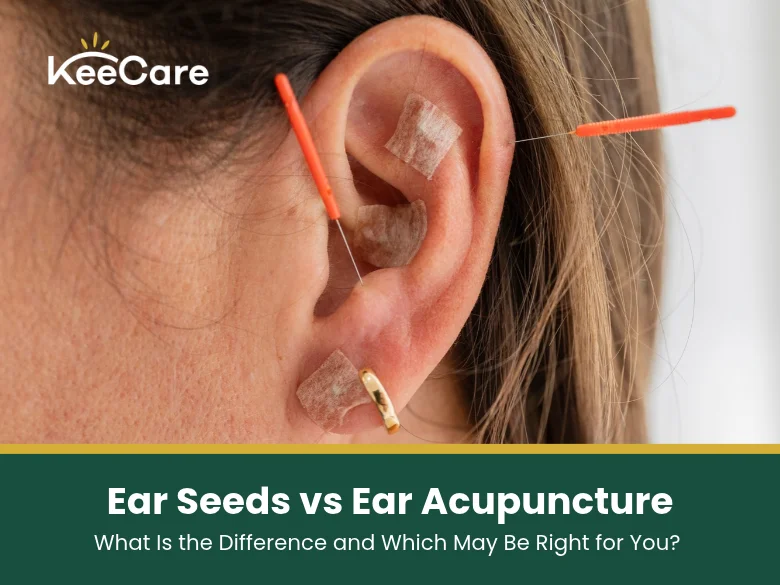
Both ear seeds and ear acupuncture work with specific reflex points on the outer ear, known as auricular points, to support wellbeing. The core principle behind both is the same: the external ear is understood within auricular acupuncture traditions to contain a map of points corresponding to different areas of the body, and stimulating those points may encourage a sense of balance and ease.
The main difference lies in how those points are stimulated. Ear acupuncture uses fine sterile needles or small semi-permanent needles inserted into selected auricular points, while ear seeds use small seeds, beads or pellets held against the skin with adhesive tape, without piercing the skin at all. That distinction matters if you are unsure about needles, concerned about sensation, or thinking through which approach might suit your situation.
At KeeCare in Upper Norwood, London, Ravinder Singh Sahota is a Registered Comprehensive Auricular Acupuncturist who uses fine sterile needles, semi-permanent needles and ear seeds as part of a personalised approach. This guide explains how both methods work, how they compare and what to consider when deciding which may be appropriate for you.
Key Takeaways
- Same theory, different method: Ear seeds and ear acupuncture both work with auricular points on the outer ear, but ear seeds apply surface pressure while acupuncture needles penetrate the skin.
- Ear seeds are non-invasive: Ear seeds do not puncture the skin and may suit people who are needle-averse or who want to explore auricular therapy for the first time.
- Ear acupuncture allows deeper stimulation: Fine needles or semi-permanent needles can reach further into the auricular point and are the method more frequently studied in clinical research contexts.
- Both can continue working after a session: Semi-permanent needles and ear seeds can both be left in place after an appointment, allowing continued stimulation between visits.
- Point selection matters as much as method: The specific auricular points chosen depend on the individual’s concerns, health background and the practitioner’s assessment, not simply on the stimulation method preferred.
- A practitioner should guide the choice: Deciding between ear seeds and ear acupuncture is not purely a matter of personal preference. A qualified practitioner can help determine which is most appropriate for your concerns.
- Both carry some considerations: Ear seeds may cause skin sensitivity or adhesive reactions. Ear acupuncture needles carry a small risk of local tenderness, minor bleeding or, with semi-permanent needles, infection if aftercare is not followed.
- Neither replaces conventional healthcare: Ear seeds and ear acupuncture are complementary approaches and should not replace medical diagnosis, prescribed treatment or professional healthcare advice.
What Is Ear Acupuncture?
Ear acupuncture, also known as auricular acupuncture, is a form of acupuncture that focuses on specific points on the external ear rather than placing needles across the full body. These auricular points are understood within acupuncture traditions to correspond to different organs, body areas or physiological functions.
The practice has roots in Traditional Chinese Medicine and was significantly developed in the twentieth century by French physician Dr Paul Nogier, whose auricular map linked ear regions to a foetal image overlaid on the ear. That framework continues to influence Western auricular acupuncture alongside Chinese and Ayurvedic traditions.
At a KeeCare session, auricular acupuncture may involve fine sterile needles, small semi-permanent disposable needles or ear seeds, depending on the individual’s concerns, comfort and what the practitioner considers most appropriate. The practitioner’s approach draws on Chinese, Ayurvedic and French auricular traditions alongside Battlefield Acupuncture techniques.
Thinking about trying auricular acupuncture or ear seeds? You can book a free 30-minute initial consultation with KeeCare to discuss your concerns and whether ear acupuncture may be appropriate for your wellbeing goals. Visit keecare.co.uk/contact/ to arrange yours.
What Are Ear Seeds?
Ear seeds are small seeds, beads or pellets placed on the surface of the outer ear using a small piece of adhesive tape. They are positioned at selected auricular points and held against the skin without breaking it. The seeds exert gentle surface pressure on the auricular point, and the client may also be shown how to apply additional pressure to specific seeds at intervals between sessions.
Ear seeds originate from the Vaccaria plant in Traditional Chinese Medicine, though modern ear seeds are often made from metal, ceramic or other materials. Some practitioners use small magnetic pellets or crystal pellets, though the therapeutic principles behind point selection remain the same regardless of the seed material.
Because ear seeds are non-invasive, they are often considered by people who are uncomfortable with needles, those who want to explore auricular therapy for the first time, or those who would like ongoing stimulation between sessions without the need for a repeated needle-based appointment.
How Do Ear Seeds And Ear Acupuncture Compare?
The table below outlines the main practical differences between ear seeds and ear acupuncture to help you understand what each involves before choosing an approach.
| Feature | Ear Seeds | Ear Acupuncture |
|---|---|---|
| Skin penetration | No | Yes |
| Method of stimulation | Adhesive-held seeds pressed onto the surface of the ear at selected auricular points | Fine needles or semi-permanent needles inserted at selected auricular points |
| Sensation during application | Gentle pressure; minimal to nothing for most people | Brief sharp sensation or mild pressure during insertion; experiences vary |
| Sensation between sessions | Dull pressure when seeds are pressed by the client | Semi-permanent needles may cause mild awareness if sleeping on that side |
| Duration in place | Several days to a week | Standard needles removed in-session; semi-permanent needles may remain briefly after |
| Between-session stimulation | Yes, by pressing seeds gently at home | Possible with semi-permanent needles |
| Suited to needle-averse clients | Well suited; no skin penetration | Depends on individual comfort with needles |
| Precision of stimulation | Surface pressure on the auricular point | Deeper stimulation of the auricular point |
| Available at KeeCare | Yes | Yes |
Both approaches are used within auricular acupuncture practice. The right choice for a given individual depends on their comfort level, their concerns and the practitioner’s assessment. At KeeCare, the two methods are not mutually exclusive, and the practitioner may use both within a single personalised session where appropriate.
Not sure which approach suits you?
Our practitioner can discuss your preferences and concerns during a free consultation at KeeCare.
What Is The Sensation Difference Between Ear Seeds And Ear Acupuncture?
With ear seeds, the initial application is usually barely noticeable. Most clients feel little to nothing when seeds are placed, as the adhesive tape and seed are simply pressed onto the surface of the ear. When the client presses on a seed between sessions, they may notice a dull ache, mild tenderness or a sense of pressure at the point.
Ear acupuncture needles produce a slightly different sensation. During insertion, some people feel a brief, sharp pinch or prick. Others report feeling almost nothing. Once the needle is in place, sensations can include mild warmth, tingling or a dull ache that typically subsides quickly. Semi-permanent needles are very small, but some clients are aware of their presence for a day or two, particularly if they lean on that side while sleeping.
If sensation is a concern, it is worth raising this directly with the practitioner before the session. The method can be adjusted based on what you are most comfortable with.
What Concerns Might Ear Seeds And Ear Acupuncture Be Explored For?
Both ear seeds and ear acupuncture work with the same auricular points and are explored for broadly similar concerns. However, the choice of method can influence suitability depending on the individual and the concern.
Stress, Relaxation and Emotional Balance
Both ear seeds and ear acupuncture may be explored as complementary support for stress and general emotional wellbeing. Points such as Shen Men and the sympathetic point are associated with calming the nervous system within auricular acupuncture traditions.
Pain and Physical Discomfort
Auricular acupuncture, including needle-based approaches, is more commonly studied in the context of pain management, including musculoskeletal pain and headaches. Ear seeds may serve as an adjunct or between-session support, but needle-based protocols tend to be used in more formally studied pain contexts.
Smoking Cessation
Specific auricular points including the Lung and Mouth points are typically used in smoking cessation protocols. Ear seeds may also be used to extend stimulation between appointments as part of a broader cessation approach.
Needle-Averse Clients
For people who are uncomfortable with needles but curious about auricular therapy, ear seeds offer a genuinely non-invasive starting point that works with the same auricular system as needle-based treatment.
Women's Wellbeing
Some clients explore auricular acupuncture alongside conventional care during different stages of women’s health. Evidence varies by individual concern, and neither ear seeds nor ear acupuncture should be presented as a treatment for hormonal conditions or fertility problems.
If you would like to understand which auricular method may be most appropriate for what you are experiencing, speak with our practitioner during a free initial consultation at KeeCare.
Can Ear Seeds And Ear Acupuncture Be Used Together?
Yes. Ear seeds and auricular acupuncture needles are not mutually exclusive. Some practitioners use ear seeds to extend the stimulation provided by a needle-based session, placing them on selected points after the needles have been removed. This allows the client to continue applying gentle pressure to specific points between appointments.
At KeeCare, the approach to each session is personalised. The practitioner will assess which combination of techniques is most appropriate based on the individual’s situation, preferences and wellbeing goals. For more detail on the full range of approaches available, see the auricular acupuncture at KeeCare page.
What Methods Are Available Within Auricular Acupuncture At Keecare?
KeeCare uses three main methods of auricular stimulation within its auricular acupuncture service. The table below explains the key differences between them.
| Feature | Fine Sterile Needles | Semi-Permanent Needles | Ear Seeds |
|---|---|---|---|
| Skin penetration | Yes | Yes | No |
| How long they stay | Removed during the session | May remain briefly after the session | Several days to a week |
| Sensation | Brief insertion feeling; varies by individual | Minimal after initial placement | Gentle pressure when pressed |
| Between-session use | Not applicable | Mild ongoing presence at the point | Client can press seeds gently at home |
| Best suited for | In-session treatment; well-studied in research | Extended auricular stimulation between visits | Needle-averse clients or first-time exploration |
The practitioner will discuss which method or combination of methods is most appropriate based on your concerns, comfort level and what you would like to achieve from the session.
What Happens During A Session At Keecare?
Whether ear seeds or acupuncture needles are used, the session follows a broadly consistent structure.
1. Initial Consultation
The practitioner will talk with you about your current concerns, relevant health background and what you are hoping to explore through complementary therapy. This conversation guides point selection and method choice.
2. Ear Assessment
The practitioner will assess the outer ear and consider which auricular points are most relevant to your situation. These observations guide the session and are not a medical diagnosis.
3. Method discussion
If you have a preference or concern about needles, this is the right moment to raise it. The practitioner will explain the available options and help you decide what feels most appropriate.
4. Application
The chosen method is applied to selected auricular points. This is generally brief. If ear seeds are used, they are pressed onto the skin with adhesive tape. If needles are used, they are inserted carefully into the selected points.
5. Aftercare Guidance
If ear seeds or semi-permanent needles are used, your practitioner will explain how to care for the area, how to apply pressure to seeds, how long they should remain and when they should be removed.
Ravinder Singh Sahota, KeeCare’s Registered Comprehensive Auricular Acupuncturist, draws on Chinese, Ayurvedic and French auricular traditions alongside Battlefield Acupuncture, tailoring each session to the individual.
Have questions about what to expect before your first session?
Speak with our team at KeeCare and ask whether ear seeds or ear acupuncture may suit your wellbeing goals.
Are There Any Side Effects Or Considerations?
Both approaches carry some considerations that clients should be aware of before proceeding.
Ear Seeds
- Mild skin sensitivity or redness beneath the adhesive tape
- Irritation from the adhesive, particularly in people with sensitive skin or adhesive allergies
- Mild tenderness at the auricular point when pressure is applied
- Seeds may fall off earlier than intended if the skin is oily, damp or if the area is rubbed
Ear Acupuncture
- Brief discomfort at the point of needle insertion
- Mild tenderness or bruising around the treated area
- Minor localised bleeding
- Dizziness or lightheadedness during or after a session
Frequently Asked Questions
Ear seeds and ear acupuncture work with the same auricular points but stimulate them differently. Needle-based auricular acupuncture has been more extensively studied in research contexts, while ear seeds are generally used as a less invasive option or as between-session support. Effectiveness varies by individual and cannot be guaranteed with either approach.
Ear seeds are typically designed to remain in place for three to five days, though some practitioners recommend up to a week. How long they stay on also depends on the skin, activity levels and exposure to moisture. Your practitioner will advise on the appropriate duration for your situation.
Yes. Ear seeds can fall off before the intended removal date, particularly if the skin is oily, the area gets wet repeatedly or the seed is rubbed. This is normal and does not mean the session was unsuccessful.
Brief exposure to water during showering is generally manageable, though prolonged soaking, swimming or activities that cause heavy sweating may loosen the adhesive. Your practitioner will give specific guidance on water exposure based on the seeds used.
Yes. Ear seeds are specifically suited to people who are needle-averse or who want to explore auricular therapy without committing to needle-based treatment. They work with the same auricular points and do not puncture the skin.
No referral is needed. You can contact KeeCare directly to arrange a free 30-minute initial consultation. If you have an existing medical condition or are under the care of a specialist, it is good practice to keep your healthcare team informed, though you do not need their permission to explore complementary therapy.
Related Reading
What Is Auricular Acupuncture? How Ear Acupuncture Works and What to Expect
How Does Ear Acupuncture Work? Understanding the Science Behind Auricular Acupuncture

Ravinder Singh Sahota
Ravinder Singh Sahota is a Registered Auricular Acupuncturist, Reiki Grand Master, Angel Blessing Healer and Colour Therapist. He combines traditional healing and energy-based therapies to promote wellbeing, relaxation and emotional balance. He introduced Colour Therapy using washable sketch pens in the UK in 2020.