
How Does Ear Acupuncture Work? Understanding the Science Behind Auricular Acupuncture
- ByRavinder Singh Sahota
- October 16, 2026
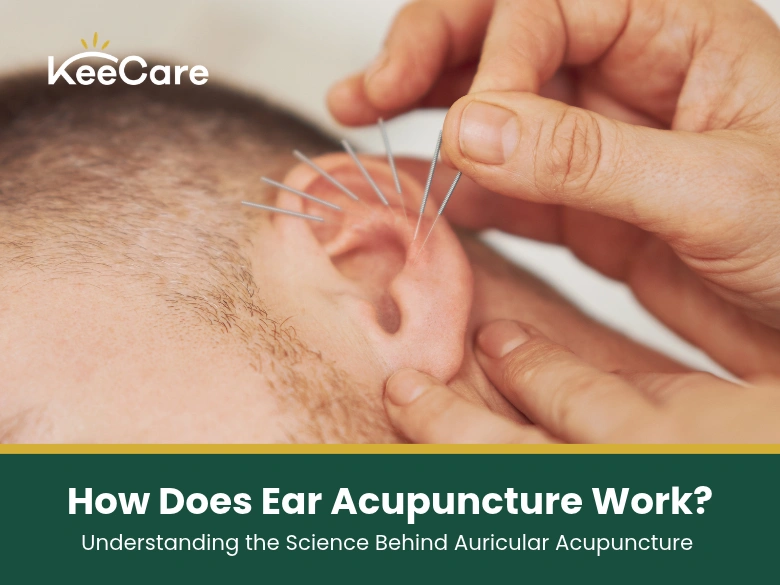
Ear acupuncture, also known as auricular acupuncture, involves stimulating carefully selected points on the external ear using fine acupuncture needles, semi-permanent disposable needles, ear seeds or other forms of pressure.
But how does ear acupuncture work, and is there a scientific explanation for why stimulating the ear may affect how the body responds?
The external ear has a rich nerve supply, including branches connected with the vagus nerve, trigeminal nerve and cervical nerves. Researchers are investigating whether stimulating these areas may influence sensory processing, pain pathways and the autonomic nervous system. However, the precise mechanisms behind auricular acupuncture are still being studied, and traditional ear maps should not be treated as a proven anatomical map of the body.
Key Takeaways
- Auricular acupuncture focuses on the external ear: Specific areas of the ear are stimulated using fine needles, disposable needles, ear seeds or other appropriate techniques.
- The ear has a complex nerve supply: Parts of the external ear are supplied by branches of the vagus, trigeminal and cervical nerves.
- Nervous-system pathways are one proposed explanation: Research is exploring whether ear stimulation can influence sensory, autonomic and pain-processing pathways.
- The exact mechanism is not fully established: Researchers continue to study how auricular acupuncture produces its observed effects and how important individual ear points are.
- Traditional and modern explanations are different: Traditional acupuncture describes energetic relationships, while modern research focuses more on nerves, brain signalling and physiological responses.
- Several forms of ear stimulation are available: Standard acupuncture needles, disposable needles and non-invasive ear seeds can all be used depending on the treatment plan.
- Minor temporary effects can occur: Tenderness, mild discomfort, minor bleeding or dizziness have been reported, while additional care is required with semi-permanent needles.
- Auricular acupuncture should complement appropriate healthcare: It should not replace diagnosis, prescribed treatment or professional medical advice.
What Is Auricular Acupuncture?
Auricular acupuncture is a form of acupuncture in which selected areas of the outer ear, or auricle, are stimulated.
The practice has historical links with traditional Chinese medicine, while the modern Western system of auricular acupuncture was strongly influenced by French physician Dr Paul Nogier during the twentieth century. Nogier developed a detailed system that viewed the ear as a microsystem representing different parts of the body.
Traditional auricular acupuncture therefore works from the idea that particular points or zones on the ear correspond with wider functions or areas of the body.
Modern scientific research approaches the subject differently. Instead of assuming that every traditional ear point corresponds directly to an organ or body part, researchers have investigated the ear’s unusually rich nerve supply and the way sensory signals from the ear are processed by the nervous system.
This distinction matters.
Traditional acupuncture theory provides one framework for selecting points, while neuroscience provides possible explanations for some of the physiological responses that may occur when parts of the ear are stimulated.
Thinking about trying auricular acupuncture? You can book a free 30-minute initial consultation with KeeCare to discuss your concerns and whether ear acupuncture may be appropriate for your wellbeing goals.
How Does Ear Acupuncture Work?
The simplest explanation is that auricular acupuncture applies controlled stimulation to areas of the external ear that contain sensory nerve endings.
Those signals can then travel through peripheral nerves towards the spinal cord and brain.
Researchers have proposed several overlapping mechanisms rather than one single explanation.
1. Stimulation of sensory nerves in the ear
The external ear receives sensory input from several nerves, including the auricular branch of the vagus nerve, the auriculotemporal branch of the trigeminal nerve, the greater auricular nerve and the lesser occipital nerve. Their overlapping distribution makes ear neuroanatomy more complex than a simple point-by-point diagram.
When a needle, seed or other stimulus is applied to the ear, sensory receptors can transmit signals through these nerve pathways. Researchers are investigating whether this stimulation may influence pain, stress and other bodily sensations.
2. The auricular branch of the vagus nerve
The vagus nerve plays an important role in communication between the brain and various organs. Its auricular branch (ABVN) supplies parts of the external ear, particularly the concha. Signals travelling through this pathway may reach brainstem regions involved in autonomic regulation, prompting research into how ear stimulation may influence nervous-system activity.
However, not every auricular acupuncture point acts through the vagus nerve, as different ear regions receive sensory input from multiple nerves.
3. The trigeminal and cervical nerve pathways
The trigeminal nerve and cervical nerves supply sensory input to different regions of the external ear. These pathways transmit sensory information to the central nervous system, contributing to how sensations are processed.
Research into auricular acupuncture suggests that its potential effects may involve multiple neurological and neuroendocrine mechanisms rather than a single pathway. The autonomic nervous system is one area researchers continue to investigate.
4. Pain modulation and sensory processing
Pain perception involves more than signals travelling from an injured area to the brain. The nervous system can modify these signals, while stress, sleep, emotional state and previous experiences may influence how pain is experienced.
Research has explored whether auricular stimulation can activate processes involved in pain modulation. Some studies report promising findings for specific pain conditions, but results vary, and evidence quality remains inconsistent. Auricular acupuncture should therefore not be presented as a guaranteed treatment. NICE guidance on acupuncture for chronic primary pain applies to specific circumstances and does not establish the effectiveness of every form of auricular acupuncture.
Traditional Ear Maps Versus Modern Neuroscience
The traditional explanation of auricular acupuncture and the modern scientific explanation are related but should not be confused.
| Aspect | Traditional auricular acupuncture | Modern research perspective |
|---|---|---|
| Main concept | The ear is viewed as a microsystem reflecting the wider body | The ear contains multiple sensory nerve pathways connected with the nervous system |
| Point selection | Based on established auricular maps, assessment and acupuncture traditions | Investigates nerve distribution, sensory stimulation and neurological responses |
| Proposed mechanism | Regulation of energy or balance within acupuncture theory | Possible effects on sensory processing, autonomic pathways and neuroendocrine responses |
| Scientific certainty | Traditional framework rather than established biomedical anatomy | Several mechanisms are plausible, but many questions remain unresolved |
| Clinical use | Individual points or protocols are selected according to the person's presentation | Research evaluates specific protocols, stimulation methods and outcomes |
If you would like to understand which auricular technique may be considered for you, speak with our practitioner during a free consultation about your current concerns, preferences and wider healthcare.
How Are Auricular Acupuncture Points Selected?
Auricular acupuncture is not simply a matter of inserting needles randomly into the ear.
A practitioner first considers the person’s reason for attending, relevant health history, current symptoms or wellbeing concerns and the treatment approach being used.
Different auricular systems may then guide the selection of particular points or zones.
At KeeCare, Ravinder Singh Sahota is a Registered Comprehensive Auricular Acupuncturist, and his approach draws on Chinese, Ayurvedic and French traditions alongside techniques including Battlefield Acupuncture.
The practitioner may choose a small number of points rather than stimulating the entire ear.
The exact technique can also vary.
Needles, disposable Needles and Ear Seeds: What Is the Difference?
Auricular acupuncture can involve several different methods of stimulation.
| Method | How it works | Does it puncture the skin? | How long is stimulation applied? |
|---|---|---|---|
| Fine acupuncture needles | Very fine sterile needles are inserted into selected ear points | Yes | Usually during the appointment |
| Disposable needles | Very small semi-permanent needles are placed in selected auricular points | Yes | May remain temporarily after the session |
| Ear seeds | Seeds, beads or pellets are attached to the surface of the ear using adhesive | No | Can provide ongoing surface pressure between appointments |
| Manual pressure | Selected areas may be gently stimulated by pressure | No | Usually short periods |
KeeCare may use fine sterile acupuncture needles, disposable needles or ear seeds depending on the person’s needs and treatment approach.
Standard Auricular Acupuncture Needles
Fine acupuncture needles are inserted into carefully selected areas of the external ear and normally removed during the session.
Some people feel very little during insertion. Others notice a brief prick, tenderness, warmth or tingling.
Disposable Needles
Disposable needles are very small semi-permanent needles specifically designed for auricular use.
They may remain in place for a limited period after the appointment, allowing the selected area to receive continued stimulation.
Because semi-permanent needles remain in the skin, hygiene and aftercare are particularly important. Research reviewing extended auricular therapies has identified infection, inflammation of the tissues around the ear cartilage and problems associated with retained needles as potential risks that practitioners need to manage carefully.
Ear Seeds
Ear seeds are a non-invasive alternative.
Small seeds, beads or pellets are attached to selected points using adhesive. The practitioner may advise the client to apply gentle pressure to particular seeds at intervals.
Because the skin is not punctured, some people who are uncomfortable with needles may prefer this approach.
Not sure whether needles, disposable needles or ear seeds would suit you? You can discuss the available auricular acupuncture options with KeeCare before deciding whether to proceed.
What Happens During an Ear Acupuncture Session?
1. Your Concerns Are Discussed
You may be asked what has brought you to the appointment, what you hope to gain from complementary therapy and whether you have any relevant medical conditions or treatment.
You should tell your practitioner if you are taking medicines, particularly anticoagulants or other medicines that affect bleeding.
The NHS also advises people considering acupuncture to tell their therapist about medical conditions, medicines and other treatments. Acupuncture may not be appropriate in areas affected by certain skin conditions or infections and may require additional caution where there is increased bleeding risk.
2. The Ear Is Assessed
The practitioner may visually examine and gently palpate the ear before choosing suitable points.
The point selection depends on the system being used and the person’s individual presentation.
3. The Selected Points Are Stimulated
4. Your Response Is Monitored
The practitioner can check how you feel during the session and adjust the approach where necessary.
You should say immediately if you feel faint, unusually uncomfortable or unwell.
5. Aftercare Is Explained
If ear seeds or semi-permanent needles are used, the practitioner should explain how to look after the area, how long they should remain in place and when they should be removed.
Does Ear Acupuncture Hurt?
Ear acupuncture may cause a brief sharp sensation, pressure, tenderness or tingling when a point is stimulated, but experiences vary.
A systematic review of adverse events associated with auricular therapy found that commonly reported effects of auricular acupuncture included insertion-site tenderness or pain, dizziness, local discomfort, minor bleeding and nausea. Most reported effects in the reviewed studies were mild and temporary.
Standard acupuncture can also occasionally cause bruising, mild pain, temporary bleeding, dizziness or drowsiness.
Tell your practitioner if anything feels uncomfortable during your appointment.
Is Auricular Acupuncture Safe?
Auricular acupuncture is generally considered a relatively low-risk intervention when performed appropriately, but it is not completely risk-free.
Potential effects can include:
- Tenderness around the treated point
- Mild discomfort
- Minor bleeding
- Bruising
- Dizziness
- Feeling faint
- Skin irritation from adhesive used with ear seeds
- Infection where the skin has been punctured
Semi-permanent needles require particular attention because they remain in the ear after the appointment.
You should also tell your practitioner if you:
- Take blood-thinning medication
- Have a bleeding disorder
- Have an infection or skin condition affecting the ear
- Have significant allergies
- Are pregnant
- Have a weakened immune system
- Have relevant medical conditions or are receiving ongoing medical treatment
Your GP or another appropriate healthcare professional should assess new, severe, persistent or unexplained symptoms.
Have questions about safety or suitability before booking? Speak with our team during a free initial consultation and share any relevant health information before treatment is considered.
How Strong Is the Scientific Evidence for Auricular Acupuncture?
The evidence is developing, but it should be interpreted carefully.
Studies have investigated auricular acupuncture and related auricular therapies for pain, perioperative care and several other concerns.
A 2024 scoping review examining auricular acupuncture for pain found evidence suggesting potential effects on both acute and chronic pain, while also identifying the autonomic and neuroendocrine systems as possible mechanisms.
A more recent systematic review of perioperative pain included 21 randomised controlled trials involving 1,527 participants. Research of this kind adds to the evidence base, but findings from a specific clinical setting should not automatically be applied to every condition or every auricular acupuncture protocol.
There are also unresolved questions.
Different studies use different ear points, needles, seeds, electrical stimulation, treatment schedules and control methods. This makes direct comparisons difficult.
Research into auricular acupuncture therefore does not justify claims that stimulating one particular ear point is proven to diagnose, prevent or cure a particular disease.
A more accurate conclusion is that auricular stimulation has plausible neurological mechanisms and an evolving clinical evidence base, but the effectiveness depends on the condition, protocol and quality of the research.
Auricular Acupuncture Versus Body Acupuncture
The main difference is where stimulation takes place.
Traditional body acupuncture uses points located throughout the body. Auricular acupuncture concentrates treatment on the external ear.
Both may use fine acupuncture needles and both draw on acupuncture traditions, but auricular treatment has developed its own maps, protocols and methods.
Auricular acupuncture also lends itself to techniques such as ear seeds and semi-permanent disposable needles, which can provide continued stimulation after the initial appointment.
Some practitioners use ear acupuncture by itself, while others combine it with body acupuncture or other complementary approaches.
How Many Ear Acupuncture Sessions Might You Need?
There is no universally correct number of auricular acupuncture sessions.
The frequency and number of appointments may depend on:
- Why you are exploring treatment
- How long the concern has been present
- The technique being used
- How you respond
- Your wider health and wellbeing
- Whether the practitioner recommends continuing after reviewing progress
A responsible practitioner should avoid promising that a fixed number of sessions will produce a particular outcome.
If you are receiving medical care for an existing condition, continue following the advice of the relevant healthcare professional.
Where Can You Find Auricular Acupuncture in South London?
KeeCare provides Auricular Acupuncture from its clinic at 98 Beulah Hill, Upper Norwood, London, SE19 3XR. The location is accessible to people from areas including Crystal Palace, Croydon, Streatham, Dulwich, West Norwood, Thornton Heath, Norbury and South Norwood.
Treatment is personalised rather than based on one standard protocol for everybody.
Frequently Asked Questions
Yes. Ear acupuncture and auricular acupuncture generally refer to the same approach: stimulating selected areas of the external ear using acupuncture needles or other auricular techniques.
Stimulation of the ear activates sensory nerves that communicate with the central nervous system. Researchers are particularly interested in pathways involving the vagus nerve, trigeminal nerve and brainstem, although the exact clinical mechanisms remain under investigation.
Auricular acupuncture traditions use maps that associate areas of the ear with different body regions or functions. These maps are part of the therapeutic system, but they should not be interpreted as a fully proven anatomical representation of the body.
Some areas of the external ear are supplied by the auricular branch of the vagus nerve, so stimulation in these regions may activate vagal sensory pathways. However, much of the ear is supplied by other nerves, and not every auricular acupuncture point should be described as vagus nerve stimulation.
Ear seeds are part of auricular therapy but are not the same as acupuncture needles. They sit on the surface of the ear and provide pressure without puncturing the skin.
Responses vary, and there is no reliable timeframe that applies to everyone. Some people may notice sensations or changes during or after treatment, while others may not notice an obvious effect. Treatment should be reviewed according to your individual response rather than promised results.
No. Auricular acupuncture is a complementary therapy and should not replace medical diagnosis, prescribed medication, physiotherapy, psychological care or other clinically appropriate treatment.
People with significant medical conditions, unexplained or worsening symptoms, increased bleeding risk, pregnancy-related concerns or ongoing treatment should make sure they receive appropriate medical guidance. Tell your acupuncture practitioner about your health conditions, medicines and other treatments before a session.
Related Reading

Ravinder Singh Sahota
Ravinder Singh Sahota is a Registered Auricular Acupuncturist, Reiki Grand Master, Angel Blessing Healer and Colour Therapist. He combines traditional healing and energy-based therapies to promote wellbeing, relaxation and emotional balance. He introduced Colour Therapy using washable sketch pens in the UK in 2020.