
How Does Ear Acupuncture Work? Understanding the Science Behind Auricular Acupuncture
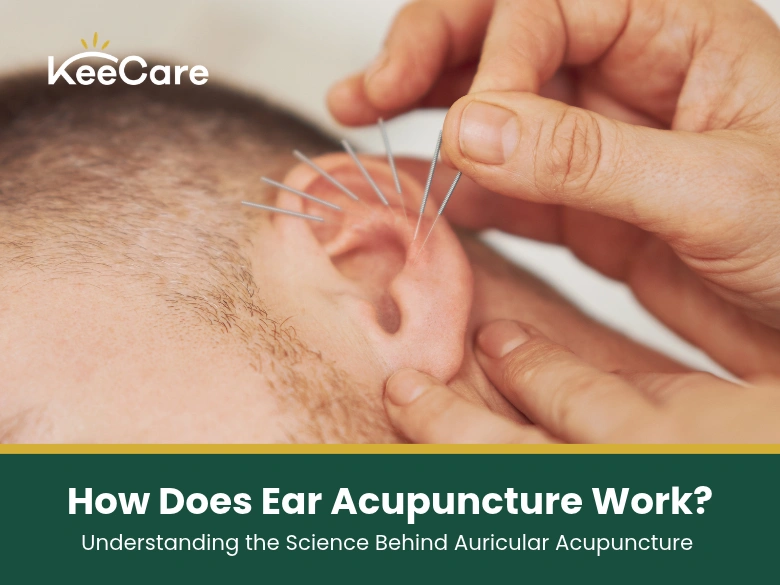
Home How Does Ear Acupuncture Work? Understanding the Science Behind Auricular Acupuncture ByRavinder Singh Sahota November 16, 2026 Ear acupuncture, also known as auricular acupuncture, involves stimulating carefully selected points on the external ear using fine acupuncture needles, semi-permanent disposable needles, ear seeds or other forms of pressure. But how does ear acupuncture work, and is there a scientific explanation for why stimulating the ear may affect how the body responds? The external ear has a rich nerve supply, including branches connected with the vagus nerve, trigeminal nerve and cervical nerves. Researchers are investigating whether stimulating these areas may influence sensory processing, pain pathways and the autonomic nervous system. However, the precise mechanisms behind auricular acupuncture are still being studied, and traditional ear maps should not be treated as a proven anatomical map of the body. Key Takeaways Auricular acupuncture focuses on the external ear: Specific areas of the ear are stimulated using fine needles, disposable needles, ear seeds or other appropriate techniques. The ear has a complex nerve supply: Parts of the external ear are supplied by branches of the vagus, trigeminal and cervical nerves. Nervous-system pathways are one proposed explanation: Research is exploring whether ear stimulation can influence sensory, autonomic and pain-processing pathways. The exact mechanism is not fully established: Researchers continue to study how auricular acupuncture produces its observed effects and how important individual ear points are. Traditional and modern explanations are different: Traditional acupuncture describes energetic relationships, while modern research focuses more on nerves, brain signalling and physiological responses. Several forms of ear stimulation are available: Standard acupuncture needles, disposable needles and non-invasive ear seeds can all be used depending on the treatment plan. Minor temporary effects can occur: Tenderness, mild discomfort, minor bleeding or dizziness have been reported, while additional care is required with semi-permanent needles. Auricular acupuncture should complement appropriate healthcare: It should not replace diagnosis, prescribed treatment or professional medical advice. What Is Auricular Acupuncture? Auricular acupuncture is a form of acupuncture in which selected areas of the outer ear, or auricle, are stimulated. The practice has historical links with traditional Chinese medicine, while the modern Western system of auricular acupuncture was strongly influenced by French physician Dr Paul Nogier during the twentieth century. Nogier developed a detailed system that viewed the ear as a microsystem representing different parts of the body. Traditional auricular acupuncture therefore works from the idea that particular points or zones on the ear correspond with wider functions or areas of the body. Modern scientific research approaches the subject differently. Instead of assuming that every traditional ear point corresponds directly to an organ or body part, researchers have investigated the ear’s unusually rich nerve supply and the way sensory signals from the ear are processed by the nervous system. This distinction matters. Traditional acupuncture theory provides one framework for selecting points, while neuroscience provides possible explanations for some of the physiological responses that may occur when parts of the ear are stimulated. Thinking about trying auricular acupuncture? You can book a free 30-minute initial consultation with KeeCare to discuss your concerns and whether ear acupuncture may be appropriate for your wellbeing goals. How Does Ear Acupuncture Work? The simplest explanation is that auricular acupuncture applies controlled stimulation to areas of the external ear that contain sensory nerve endings. Those signals can then travel through peripheral nerves towards the spinal cord and brain. Researchers have proposed several overlapping mechanisms rather than one single explanation. 1. Stimulation of sensory nerves in the ear The external ear receives sensory input from several nerves, including the auricular branch of the vagus nerve, the auriculotemporal branch of the trigeminal nerve, the greater auricular nerve and the lesser occipital nerve. Their overlapping distribution makes ear neuroanatomy more complex than a simple point-by-point diagram. When a needle, seed or other stimulus is applied to the ear, sensory receptors can transmit signals through these nerve pathways. Researchers are investigating whether this stimulation may influence pain, stress and other bodily sensations. 2. The auricular branch of the vagus nerve The vagus nerve plays an important role in communication between the brain and various organs. Its auricular branch (ABVN) supplies parts of the external ear, particularly the concha. Signals travelling through this pathway may reach brainstem regions involved in autonomic regulation, prompting research into how ear stimulation may influence nervous-system activity. However, not every auricular acupuncture point acts through the vagus nerve, as different ear regions receive sensory input from multiple nerves. 3. The trigeminal and cervical nerve pathways The trigeminal nerve and cervical nerves supply sensory input to different regions of the external ear. These pathways transmit sensory information to the central nervous system, contributing to how sensations are processed. Research into auricular acupuncture suggests that its potential effects may involve multiple neurological and neuroendocrine mechanisms rather than a single pathway. The autonomic nervous system is one area researchers continue to investigate. 4. Pain modulation and sensory processing Pain perception involves more than signals travelling from an injured area to the brain. The nervous system can modify these signals, while stress, sleep, emotional state and previous experiences may influence how pain is experienced. Research has explored whether auricular stimulation can activate processes involved in pain modulation. Some studies report promising findings for specific pain conditions, but results vary, and evidence quality remains inconsistent. Auricular acupuncture should therefore not be presented as a guaranteed treatment. NICE guidance on acupuncture for chronic primary pain applies to specific circumstances and does not establish the effectiveness of every form of auricular acupuncture. Traditional Ear Maps Versus Modern Neuroscience The traditional explanation of auricular acupuncture and the modern scientific explanation are related but should not be confused. Aspect Traditional auricular acupuncture Modern research perspective Main concept The ear is viewed as a microsystem reflecting the wider body The ear contains multiple sensory nerve pathways connected with the nervous system Point selection Based on established auricular maps, assessment and acupuncture traditions Investigates nerve distribution, sensory stimulation and neurological responses Proposed mechanism Regulation of