
What Is Auricular Acupuncture? How Ear Acupuncture Works and What to Expect
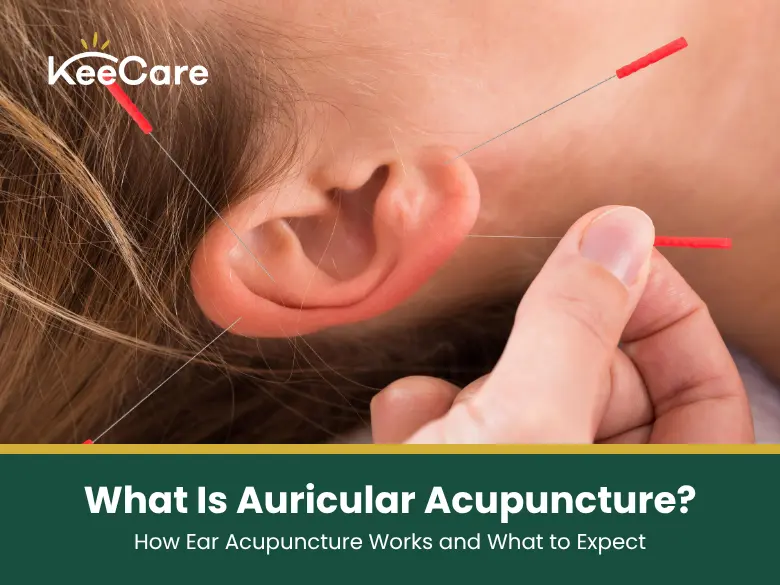
Auricular acupuncture is a complementary therapy that involves stimulating specific points on the outer ear, usually with fine needles, semi-permanent needles or ear seeds. It is based on the auricular microsystem model, in which different areas of the outer ear are mapped to different parts of the body. Stimulating ear points may support balance in corresponding areas.
At KeeCare in Upper Norwood, London, auricular acupuncture is delivered by The Acupuncture Society and CNHC-registered practitioner who draws on Chinese, Ayurvedic and French methods to create a personalised approach for each client. Whether you are managing persistent pain, exploring support for stress or simply curious about what ear acupuncture involves, this guide explains how it works, what a session looks like and what you can
Key Takeaways
- The ear as a microsystem. Auricular acupuncture is based on the understanding that the outer ear contains reflex points corresponding to different areas of the body, making it a self-contained system for supporting overall wellbeing.
- Multiple traditions, one approach. Auricular acupuncture can draw on Traditional Chinese Medicine, Ayurvedic and French approaches, alongside protocols such as Battlefield Acupuncture. Each offers a slightly different framework for assessing and treating the ear.
- Different tools, same principles. Ear points can be stimulated using fine acupuncture needles, ASP semi-permanent needles or ear seeds, depending on the client’s needs and preferences.
- Studied for pain and stress. Auricular acupuncture has been studied for its potential to support pain management and stress reduction and is used in some clinical settings, including military and hospital environments.
- No GP referral is needed. You can book a consultation at KeeCare without a referral from your GP, although you should continue to follow any existing medical advice from your healthcare team.
- Sessions are relatively short. A typical auricular acupuncture session is relatively brief, with needles or ear seeds placed with minimal discomfort for many people.
- Results may build over time. Some clients find that a course of sessions provides more noticeable support than a single treatment, particularly for chronic or long-standing concerns.
- Complementary, not a replacement. Auricular acupuncture is designed to complement conventional medical care, not replace it. Always continue with any treatment your doctor has recommended.
What Is Auricular Acupuncture?
Traditional Chinese body acupuncture has a long history dating back more than 3000 years. The acupuncture points around the ears belong to the major body acupuncture channels or meridians.
Auricular acupuncture focuses entirely on the outer ear. Rather than inserting needles across the body, the practitioner works with a set of reflex points located on the external ear, each understood within auricular acupuncture systems to correspond to a specific organ, body part or physiological function. The concept draws on the idea of a microsystem, where one small area of the body, in this case the ear, mirrors the whole.
Modern Auricular Therapy is not, by its very definition, either traditional or Chinese. The use of the ear as Microsystem for the treatment of Bodily disharmony only became a primary treatment methodology in the 1950s after the discoveries of Dr Paul Nogier in Lyon, France. Through decades of investigation, Dr Paul Nogier was able to map the reflex points on the auricle which resembles fetus.
Now, Auricular acupuncture is being further developed using western and eastern medicine concepts.
Today, auricular acupuncture is used in complementary therapy practice and has also been studied and used in selected clinical and military settings. Its popularity has grown in part because it is compact, relatively quick to perform and does not require the client to undress or recline on a treatment table for an extended period.
Wondering whether auricular acupuncture might be right for you?
Get in touch with our practitioner to talk about your concerns and book a free initial consultation.
How Does Auricular Acupuncture Actually Work?
Auricular Therapy or Auricular Acupuncture is a physical reflex therapy that can detect physical (somatic), physiological and psycho emotional disturbances in the body which are then projected onto the external auricle. The treatment of ear points will then stimulate the brain which in turn will alleviate physical, physiological or psycho-emotional problems in the body. The rich network of nerve innervations allows energetic organ information to be conveyed through the nervous system between the corresponding parts of the brain and specific anatomical area of body.
For Auricular treatment, the Auricular Acupuncture points on external ear are stimulated using various modalities e.g. Needles, Seeds etc.
Sterile, single use, stainless, disposable acupuncture needles are used.
The Ear seeds (also known as Vaccaria seeds) are non-invasive pressure seeds. These seeds are held in place on the ear with a small piece of adhesive tape.
What Are the Main Ear Acupuncture Points?
The ear contains dozens of recognised acupuncture points, and different auricular acupuncture systems map numerous points across the outer ear. The specific points selected vary according to the practitioner, the system being used and the client’s individual concerns.
The following are among the points commonly referenced in auricular acupuncture:
- Shenmen (Spirit Gate). One of the most widely used auricular points, associated with calming the nervous system and supporting relaxation.
- Point Zero. Described within some auricular acupuncture systems as a point associated with balance or homeostasis.
- Sympathetic point. Associated with the autonomic nervous system and used to support relaxation of the body’s stress response.
- Thalamus point. Often included in pain management protocols.
- Kidney point. Used in protocols relating to energy, vitality and urinary health.
- Lung point. Included in smoking cessation and respiratory wellbeing protocols.
- Master Omega point. Associated with emotional regulation and stress.
And many more points are used for each individual case according to diagnosis.
The specific points used in any given session will depend on the client’s concerns and the practitioner’s assessment. The KeeCare approach to auricular acupuncture in London integrates Chinese, Ayurvedic and French methods alongside Battlefield Acupuncture, allowing the practitioner to consider each client’s needs from multiple perspectives.
Curious which ear points might be relevant to what you are experiencing?
Our practitioner can walk you through the assessment process.
What Can Auricular Acupuncture Help With?
Auricular acupuncture is used to support a broad range of physical and emotional concerns, and research into its applications continues to grow. The following are among the areas where clients commonly explore auricular therapy as a complementary approach.
Pain management. Auricular acupuncture has been studied in the context of pain, including musculoskeletal pain, headaches and post-operative discomfort. Battlefield Acupuncture, a protocol developed for military use, applies to five specific ear points and has been adopted in US military, for managing pain.
Stress and anxiety. The Shenmen and sympathetic points are frequently used in protocols designed to support the nervous system and promote a sense of calm. Some clients report feeling more relaxed following a session.
Smoking cessation. Ear acupuncture for smoking cessation is one of the more researched applications of auricular therapy. Specific points, including the Lung and Shenmen points, are typically used in protocols for clients trying to reduce or stop smoking.
Addiction support. The NADA protocol (National Acupuncture Detoxification Association) uses five specific ear points to support clients working through substance-related concerns. This protocol is used in some drug and alcohol services in the UK and internationally.
Men’s and Women’s wellbeing. Some people explore auricular acupuncture alongside conventional care during different stages of men’s and women’s health.
Digestive, respiratory, circulatory, excretory and general health concerns. Ear points are associated with the stomach, spleen, intestines, liver, heart, lungs, gall bladder, kidney and urinary bladder and are used in protocols related to digestive wellbeing, respiratory wellbeing, circulatory wellbeing, excretory wellbeing and general vitality.
Auricular Acupuncture vs. Body Acupuncture: What Is the Difference?
Many people wonder whether auricular acupuncture and full-body acupuncture work in the same way and which might be more appropriate for their needs. The two share some foundational principles but differ in scope, session format and application.
| Feature | Auricular Acupuncture | Full-body Acupuncture |
|---|---|---|
| Treatment area | Outer ear only | Meridian points across the full body |
| Session format | Client typically seated or semi-reclined | Clients usually lie down, partially undressed |
| Session duration | Often 60 to 90 minutes | Typically, 45 to 60 minutes |
| Tools used | Fine needles, ASP needles, or ear seeds | Fine acupuncture needles |
| Portability | Ear seeds can remain in place between sessions | Not applicable |
| Best suited for | Targeted support: stress, pain, general wellbeing, or addiction | Broader systemic or meridian-based balancing |
| Integration | Can be combined with other therapies | Often delivered as a standalone session |
Both approaches can be valuable, and some practitioners integrate auricular points into a broader body acupuncture session. At KeeCare, the focus is on auricular acupuncture as a primary modality, supported by complementary therapies such as Reiki and Colour Therapy where appropriate for the individual.
What Tools Are Used in Auricular Acupuncture?
One of the distinctive features of auricular acupuncture is that it can be delivered using several different types of stimulation, each suited to slightly different needs and preferences.
| Feature | Fine Acupuncture Needles | ASP Semi-Permanent Needles | Ear Seeds |
|---|---|---|---|
| How long they stay | Removed in the same session | Can remain for several days | Can remain for several days to a week |
| Sensation | Minimal; brief on insertion | Minimal after initial placement | Gentle pressure when pressed |
| Best suited for | Single-session treatment | Extended stimulation between appointments | Clients new to needles or preferring a gentler approach |
| Client involvement | Passive during session | Can press gently between sessions | Can press gently between sessions |
Your practitioner will discuss which method is most appropriate based on your concerns, comfort level and treatment goals. Some clients begin with ear seeds and progress to needles as they become more familiar with the therapy.
What Happens in a First Auricular Acupuncture Session?
1. Initial consultation. Your first appointment includes a conversation about your current concerns, health background, lifestyle and well-being goals. This gives your practitioner the information needed to identify which ear points to focus on and which stimulation method to use.
2. Assessment. The practitioner may examine the outer ear and note areas of tenderness or visible variation as part of the auricular assessment. These observations are used to guide point selection and are not a medical diagnosis.
3. Point selection. Based on the consultation, a personalised set of auricular points is chosen. A typical session may involve stimulating between four and twelve points, although this varies depending on the individual.
4. Stimulation. Fine needles, ASP needles or ear seeds are applied to the chosen points. The sensation during needle insertion is usually described as a brief pinch or nothing at all. Ear seeds involve no piercing and produce only gentle pressure when pressed.
5. Resting period, if needles are used. If fine needles are used, you may rest for a short period while they remain in place. During this time, some clients report feeling deeply relaxed.
6. Removal and aftercare. Needles are carefully removed. Your practitioner will discuss what to expect after the session and recommend how frequently to return based on your goals.
Some clients leave first session feeling some relief from their illness, calm and rest. Mild tenderness at the treated points can occur and typically settles quickly.
How Many Auricular Acupuncture Sessions Do I Need?
The number of sessions that may be beneficial depends on your individual concerns, how long you have been experiencing them and how your body responds to the therapy. There is no single answer that applies to everyone.
As a general guide:
- Acute or short-term concerns such as a recent injury or temporary stress may respond in fewer sessions, sometimes two to four.
- Chronic or long-standing concerns such as persistent back pain, menopause symptoms or ongoing anxiety may benefit from a longer course, typically twelve sessions or more.
- Maintenance. Some clients continue with occasional sessions after their primary concern has settled to support general wellbeing.
Is Auricular Acupuncture Safe?
When delivered by a trained, registered practitioner, auricular acupuncture is considered safe for most adults. At KeeCare, treatments are provided by a CNHC-registered practitioner who is also a member of The Acupuncture Society.
Single-use, sterile needles are used for every session, and all materials are disposed of safely in accordance with clinical guidelines. Ear seeds do not puncture the skin, although temporary pressure sensitivity or irritation from the adhesive can occasionally occur.
Some people may not be suitable candidates for auricular acupuncture, including those with certain skin conditions affect the ear, those taking blood-thinning medication or those who are pregnant without prior medical advice. Your practitioner will ask about your health background before proceeding.
If you have an existing medical condition or are currently receiving treatment from a GP or specialist, you should continue to follow their guidance. Auricular acupuncture is a complementary therapy and is not intended to replace conventional medical care.
Ready To Experience Auricular Acupuncture in London?
Auricular acupuncture offers a focused complementary approach that can be adapted to your comfort level, whether you prefer non-invasive ear seeds or acupuncture needles. Sessions are relatively brief and can be adapted to suit your preferences, whether you would like to start with ear seeds or are ready to try fine needles.
KeeCare is based in Upper Norwood, London, and welcomes clients from across South London, including Crystal Palace, Dulwich, Streatham, Croydon and West Norwood. The practice is registered with the CNHC and The Acupuncture Society, and the approach brings together Chinese, Ayurvedic and French auricular methods to build a personalised plan for everyone.
A free 30-minute initial consultation is available to help you understand whether auricular acupuncture is a suitable approach for your concerns. To find out more or to book your consultation, get in touch with our practitioner at KeeCare. We will be happy to answer your questions and help you take the first step towards feeling more balanced.
Frequently Asked Questions
Regular acupuncture uses needle points distributed across the body, following meridian pathways. Auricular acupuncture works only on the outer ear, which is understood within auricular acupuncture systems as a microsystem reflecting the entire body. Sessions tend to be shorter, and clients generally remain seated or semi-reclined rather than lying down.
Most clients describe the sensation as a brief, mild pinch at the time of insertion, and many reports feel nothing at all. Ear seeds and ASP needles are gentler still. Any tenderness at treated points typically settles within a few hours.
Auricular acupuncture is used by many practitioners as a complementary approach to supporting the nervous system, and some clients report a noticeable sense of calm following sessions. It is not a medical treatment for anxiety disorders. You should continue any support recommended by your GP or mental health team alongside complementary approaches.
No referral is needed. You can contact KeeCare directly to book a free initial consultation. If you have an existing medical condition or are under the care of a specialist, it is good practice to keep your healthcare team informed, but you do not need their permission to explore complementary therapy.
Yes. Ear seeds are a non-invasive option that can remain in place for several days to a week after your appointment. Your practitioner will show you how to press them gently between sessions and advise you on when to remove them.
Most healthy adults can receive auricular acupuncture safely when treated by a registered practitioner. However, it may not be suitable for people with certain skin conditions affecting the ear, those taking blood-thinning medication or during pregnancy without medical advice. Your practitioner will discuss your health background during the initial consultation.
This varies between individuals and depends on the nature of the concern being addressed. Some clients report feeling some relief from their illness and more relaxed immediately after their first session. For chronic or long-standing concerns, a course of sessions is typically recommended before evaluating the results.