
Ear Seeds: How They Work and How to Use Them Between Sessions
- ByRavinder Singh Sahota
- November 24, 2026
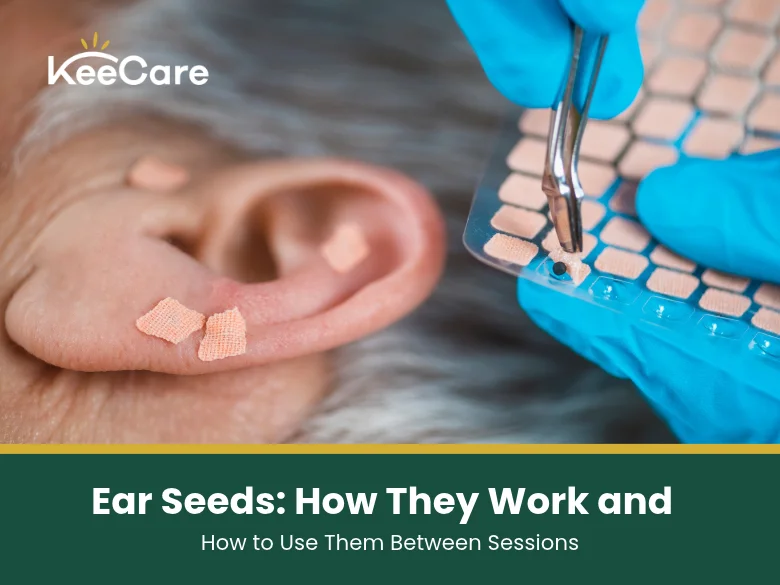
Ear seeds are small, smooth pellets applied to specific points on the outer ear as part of auricular acupuncture. They are held in place with a small piece of adhesive tape and can be gently pressed by the person wearing them to continue stimulating the point between clinic sessions. For people who want to extend the benefit of an in-clinic treatment into their daily routine, ear seeds offer a simple and discreet way to do that.
The concept of ear seeds comes from auricular therapy, a branch of acupuncture based on the idea that the outer ear contains points which correspond to different areas of the body. This tradition has roots in Chinese medicine, and modern practitioners also draw on French and other auricular mapping systems. Ear seeds are most often used as a complement to formal acupuncture sessions rather than as a standalone treatment.
At KeeCare in Upper Norwood, London, Ravinder Singh Sahota is a Registered Comprehensive Auricular Acupuncturist holding registrations with the CNHC, The Acupuncture Society and the Microsystem Acupuncture Society. His practice draws on Chinese, Ayurvedic and French auricular traditions, and ear seeds may be used alongside other approaches as part of a personalised session plan.
Key Takeaways
- Ear seeds are applied to the surface of the ear: They are small pellets or seeds attached to the skin with adhesive tape at specific auricular points, with no insertion or piercing of the skin.
- They extend the effect of an in-clinic session: The main purpose of ear seeds between sessions is to allow gentle, ongoing stimulation of auricular points through light pressing at home.
- Traditional ear seeds come from the vaccaria plant: Vaccaria seeds have been used in Chinese auricular therapy for centuries; modern alternatives include stainless steel, gold-plated or magnetic pellets.
- Ear seeds are generally worn for three to five days: Most practitioners recommend removing them after a few days, changing them more frequently in warmer weather or if skin irritation occurs.
- Pressing technique matters: Gently pressing each seed for two to three seconds, two to three times a day, is the typical guidance; pressing too firmly or too frequently can cause discomfort or skin irritation.
- Ear seeds are not a substitute for professional treatment: They work best as a complement to in-clinic auricular acupuncture and are not intended to replace a practitioner-led session for specific concerns.
- The evidence base for ear seeds is developing but limited: Some studies suggest potential benefits in areas such as relaxation, stress and smoking cessation support, but robust clinical evidence for specific conditions remains limited.
- Ear seeds should be removed if irritation occurs: If skin becomes sore, itchy or inflamed under the tape, the seeds should be removed promptly and the area allowed to settle before any further application.
What are ear seeds?
Ear seeds are tiny pellets applied to the skin surface of the outer ear at specific auricular acupuncture points. Each seed is attached to a small square of adhesive tape, often clear or skin-toned, which holds it gently against the skin without piercing or puncturing. The term “ear seed” comes from the original use of vaccaria plant seeds in Traditional Chinese Medicine, though today many practitioners also use metal or magnetic alternatives.
Unlike auricular acupuncture needles, ear seeds do not puncture the skin at all. They work through surface pressure, stimulating the same points that a needle would reach, in a milder and more sustained way. Because they can be left in place between clinic appointments, they are particularly useful when a practitioner wants to continue stimulating a point in the days following a session.
How do ear seeds work?
Ear seeds work by applying continuous, gentle pressure to specific points on the outer ear. Within auricular therapy, the ear is understood to contain a microsystem in which different points correspond to different organs, body regions and functional systems. By pressing on a point associated with a particular area, the practitioner aims to influence the energy or nerve pathways connected to it.
When a person presses their ear seeds, the stimulation is similar in principle to the stimulation provided by an acupuncture needle, though the effect is gentler and more gradual. The gentle pressure is thought to activate local nerve endings, which in auricular tradition are understood to relay signals along pathways connected to the broader auricular microsystem.
From a conventional anatomical perspective, the ear contains a dense network of nerve endings, including branches of the vagus nerve, the trigeminal nerve and others with wide-ranging connections throughout the body. Research into auriculotherapy has explored whether stimulating these nerve pathways may produce measurable effects, though the mechanisms remain an active area of investigation rather than settled science.
Ear seeds vs auricular acupuncture needles
Both ear seeds and auricular acupuncture needles are used to stimulate specific points on the outer ear, but they serve different roles within a treatment plan. The table below sets out the key differences.
| Aspect | Ear Seeds | Auricular Acupuncture Needles |
|---|---|---|
| What they are | Small seeds or pellets fixed to the ear surface with adhesive tape | Fine sterile single-use needles inserted into specific points on the outer ear |
| Application | Applied to the skin surface only; no insertion | Needles are gently inserted into the skin at targeted auricular points |
| Duration of use | Worn continuously for several days between sessions | Inserted during the session and removed before the client leaves |
| Used between sessions | Yes; client can gently press the seeds at home to continue stimulation | No; needles are only used in-clinic under practitioner supervision |
| Sensation during use | Mild pressure when pressed; generally minimal sensation | Mild sensation at the point of insertion; most clients find it very tolerable |
| Typical role | Extends the effect of a session and supports ongoing self-care | Primary treatment tool used by the practitioner during each session |
| Suitable for | Adults seeking gentle between-session support; often used alongside needle treatment | Adults receiving auricular acupuncture under practitioner supervision |
In practice, ear seeds and needles are often used together. A practitioner may insert needles during a session to work deeply on targeted points and then apply ear seeds to selected points for the client to maintain between visits.
Curious about whether ear seeds might be suitable for your situation?
Our team can discuss your concerns and explain what a first auricular acupuncture session at KeeCare would involve. Visit keecare to arrange a free 30-minute initial consultation.
What are ear seeds made from?
The original ear seeds used in Chinese auricular therapy came from the vaccaria plant (Vaccaria segetalis), sometimes called cow herb or cow cockle. The dried seeds are small, round and hard, making them ideal for sustained surface pressure. Vaccaria seeds have been used in this way for centuries and remain in use today, particularly in practices that prioritise traditional materials.
Modern ear seeds are also made from other materials, each with slightly different characteristics. Stainless steel beads are common and durable; gold-plated pellets are preferred by some practitioners for certain points; magnetic pellets are sometimes used in approaches that incorporate magnetic therapy alongside auricular work. All are designed to be small, smooth and comfortable against the skin, with an adhesive backing that holds them securely without being harsh on the ear.
How are ear seeds applied?
Ear seeds are applied by the practitioner during or at the end of a session, using fine-tipped tweezers to position each seed precisely on the identified auricular point. The ear surface is usually cleaned first to ensure good adhesion. Each seed is set on a small piece of adhesive tape and placed firmly against the skin without pressing hard enough to cause discomfort.
Most applications use one ear at a time, though some protocols involve both ears. The practitioner will typically show the client where each seed has been placed and briefly explain which points are being targeted and why. This conversation helps the client understand how to interact with the seeds at home and what they might notice during the days they are worn.
After the seeds are in place, the practitioner will gently demonstrate the pressing technique so the client knows how much pressure to apply. The whole application process generally takes only a few minutes at the end of a session and does not add significantly to the appointment time.
How to use ear seeds between sessions
Using ear seeds at home is straightforward. The general guidance is to press each seed gently with a fingertip for two to three seconds at a time, repeating this two to three times a day. The pressure should be firm enough to create a mild sensation at the point but should never be painful. If pressing a seed causes sharp or persistent discomfort, stop immediately.
The table below sets out the most commonly used auricular points, where they are located and what they may be used to support within auricular tradition. This is provided for general information; your practitioner will apply seeds to the specific points most relevant to your individual situation, not necessarily all of the points listed.
| Ear Point | Location on Ear | May Be Used to Support |
|---|---|---|
| Shen Men | Upper triangular fossa of the ear | Relaxation, stress support, general calming; one of the most commonly used points in auricular therapy |
| Sympathetic | Inner antihelix, near its junction with the antihelix | Autonomic nervous system regulation; often used for stress-related concerns |
| Zero Point | Centre of the helix root | General balancing point; used to bring the body towards homeostasis in auricular tradition |
| Lung | Conchal area of the ear | Respiratory concerns; also used in smoking cessation support protocols |
| Stomach | Conchal area adjacent to the ear canal | Digestive discomfort and appetite support in traditional auricular practice |
| Kidney | Conchal bowl, near the antihelix | Urinary wellbeing, fatigue and kidney-related concerns in auricular tradition |
| Liver | Conchal bowl area | Digestive and emotional balance; used in conjunction with other points |
| Endocrine | Intertragic notch area | Hormonal balance; relevant in menopause and other hormonal wellbeing contexts |
It is worth noting that auricular point locations are determined by the practitioner based on their training and assessment, and different auricular mapping systems may locate some points slightly differently. The table above reflects the general positions used across common auricular therapy traditions and is intended as an overview rather than a self-treatment guide.
If you would like to understand more about auricular acupuncture and how ear seeds might fit into a personalised session plan, our team would be happy to answer your questions. Contact KeeCare to book your free initial consultation.
How long do ear seeds stay on?
Ear seeds are typically worn for three to five days. After this period, the adhesive tends to weaken naturally and the seeds should be removed and discarded. In warmer weather, when the ear sweats more, the adhesive may lose its hold sooner, so checking the seeds daily and removing them if they begin to lift is good practice.
Some practitioners recommend changing the seeds more frequently, every two to three days, particularly during summer months or for clients with sensitive skin. If a seed falls off on its own before the intended removal date, it can be noted and mentioned at the next appointment. Ear seeds are single-use and should not be reapplied once removed.
Are ear seeds safe? Are there any side effects?
Ear seeds are generally considered safe for most adults when applied by a trained practitioner. Because they sit on the skin surface rather than penetrating it, the risk profile is lower than that of acupuncture needles. The most commonly reported concern is mild skin irritation from the adhesive tape, which typically resolves quickly once the seeds are removed.
People with known tape or latex allergies should inform their practitioner before ear seeds are applied. Hypoallergenic tape options are available and practitioners experienced with ear seeds will often have these available as a matter of course. If skin becomes inflamed, blistered or persistently sore under a seed, the seed should be removed and medical attention sought if the irritation does not settle.
There are some situations in which ear seeds are used with additional care or avoided. These include pregnancy, where certain auricular points are traditionally contraindicated; active skin conditions on or around the ear; and open wounds, cuts or abrasions. A good practitioner will take a full health history before applying ear seeds and can advise on any specific considerations relevant to your situation.
What might ear seeds be used to support?
Within auricular therapy tradition, ear seeds may be used to support a wide range of physical and emotional wellbeing concerns. Because different ear points are associated with different systems of the body, the approach can be tailored to what a practitioner identifies as the most relevant points for each person. Common areas in which ear seeds are incorporated as part of auricular acupuncture include stress and relaxation, sleep quality, headaches, smoking cessation support and digestive discomfort.
Ear seeds are also used in some women’s health contexts, including menopause-related wellbeing concerns such as sleep disruption, mood changes and general tension. Specific auricular points are associated in Chinese medicine tradition with hormonal balance, and practitioners trained in auricular therapy for women’s health may apply seeds to these points as part of a broader session plan.
It is important to be clear that the use of ear seeds for any of the concerns listed above is based on auricular therapy tradition and clinical practice rather than on established, high-quality clinical evidence for specific medical conditions. If you have a health concern that requires a diagnosis or treatment decision, that assessment should be made by a qualified healthcare professional. Ear seeds and auricular acupuncture may then be explored as a complementary approach alongside appropriate conventional care.
What does the evidence say about ear seeds?
Research into auricular acupuncture and ear seeds has grown steadily, with studies looking at applications ranging from pain management and anxiety to smoking cessation and sleep. A number of systematic reviews and clinical trials suggest that auricular therapy may have a positive effect on certain outcomes, particularly in relation to relaxation and anxiety. However, the overall quality of this research is variable. Many studies are small, methodologically inconsistent or lack robust controls, making it difficult to draw firm conclusions about efficacy for specific conditions.
Ear seeds in particular have been studied as a tool for smoking cessation support and for reducing anxiety in clinical and pre-operative settings. Some findings are encouraging, but the evidence is not strong enough to position ear seeds as a clinically recommended treatment for any specific condition. The NHS does not currently include auricular acupuncture or ear seeds among its standard evidence-based recommendations, though some NHS and hospice settings have made complementary approaches such as acupuncture available as optional supportive care.
The honest position for anyone considering ear seeds is that the research is developing rather than definitive. For some people, ear seeds form a genuinely useful part of a broader wellbeing routine, particularly when used as part of a practitioner-led auricular acupuncture plan. For others, the evidence may not feel sufficient. Making an informed decision based on a conversation with a qualified practitioner, rather than on health claims alone, is always the best starting point.
Ear seeds and auricular acupuncture in Upper Norwood and South London
KeeCare is based at 98 Beulah Hill, Upper Norwood, London SE19 3XR. Clients travel to the clinic from across South London, including Crystal Palace, Croydon, Dulwich, West Norwood, Streatham, Thornton Heath, Norbury and South Norwood.
Auricular acupuncture at KeeCare is delivered by Ravinder Singh Sahota, a Registered Comprehensive Auricular Acupuncturist registered with the CNHC, The Acupuncture Society and the Microsystem Acupuncture Society. His practice draws on Chinese, Ayurvedic and French auricular traditions and considers each client’s individual concerns and wellbeing rather than following a fixed protocol. Ear seeds may be used alongside fine needles or ASP needles as part of a session plan. KeeCare also offers Reiki, colour therapy and angel healing as complementary approaches that may be explored individually or as part of a broader wellbeing plan where appropriate.
A free 30-minute initial consultation is available for new clients, providing an opportunity to discuss your situation, ask questions about auricular acupuncture and ear seeds and understand what a first session would involve before you decide to book.
Frequently Asked Questions
Ear seeds do not pierce the skin and are not painful to have applied. During application, most people feel very little. When pressing the seeds at home, you should feel a mild pressure sensation at the point. If pressing causes sharp or persistent pain, stop immediately and contact your practitioner, as the seed may have shifted or the pressure may be too firm.
Brief contact with water during showering or hair washing is generally fine, but prolonged soaking, swimming or activities that cause heavy sweating may weaken the adhesive and cause the seeds to fall off sooner. Pat the ear dry gently after washing rather than rubbing. Your practitioner can advise on what is recommended for the specific type of adhesive used.
Gently peel the adhesive tape away from the ear, taking care not to drag sharply across the skin. If the tape has been in place for several days, it may lift easily on its own. If it feels firmly attached, dampening the area slightly first can help loosen the adhesive. Dispose of used seeds; they should not be reapplied.
The number of seeds applied varies depending on the practitioner’s assessment and the concerns being addressed. Some sessions may involve just two or three seeds on key points; others may use more. Your practitioner will explain which points are being targeted and why, and can discuss the rationale for the number chosen.
Ear seed kits are commercially available, but applying ear seeds without professional training is not straightforward. Correctly identifying auricular points requires specific training, and applying seeds to incorrect or inappropriate points may produce unintended effects. It is generally advisable to have ear seeds applied by a qualified auricular acupuncture practitioner who can assess which points are relevant to your situation.
The frequency of sessions depends on your individual concerns and how you respond to treatment. Many people begin with weekly or fortnightly appointments while exploring the approach, then adjust their schedule based on how they feel. Your practitioner will discuss a session plan with you at the initial consultation and can adapt it over time.
Ear seeds are one tool within auricular acupuncture, not the same as the full practice. Auricular acupuncture may also involve fine needles, ASP needles and other techniques, applied during a session by a trained practitioner. Ear seeds extend the effect of a session into the days between appointments. Using ear seeds alone, without the broader assessment and treatment a practitioner provides, is a different and much more limited approach.
ASP (Aiguille Semi-Permanente) needles are very small, semi-permanent acupuncture needles that are inserted into the skin at the auricular point and left in place for several days. Unlike ear seeds, which sit on the skin surface, ASP needles do puncture the skin. Both are used to extend the effect of a session between appointments, but they differ in how they are applied and in their depth of stimulation. Your practitioner can advise on which approach may be more suitable for your situation.