
Ear Seeds: How They Work and How to Use Them Between Sessions
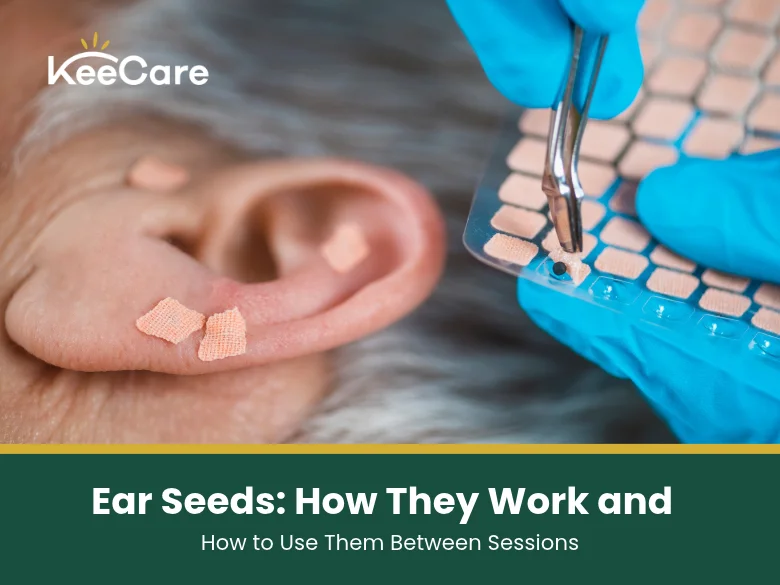
Home Ear Seeds: How They Work and How to Use Them Between Sessions ByRavinder Singh Sahota November 23, 2026 Ear seeds are small, smooth pellets applied to specific points on the outer ear as part of auricular acupuncture. They are held in place with a small piece of adhesive tape and can be gently pressed by the person wearing them to continue stimulating the point between clinic sessions. For people who want to extend the benefit of an in-clinic treatment into their daily routine, ear seeds offer a simple and discreet way to do that. The concept of ear seeds comes from auricular therapy, a branch of acupuncture based on the idea that the outer ear contains points which correspond to different areas of the body. This tradition has roots in Chinese medicine, and modern practitioners also draw on French and other auricular mapping systems. Ear seeds are most often used as a complement to formal acupuncture sessions rather than as a standalone treatment. At KeeCare in Upper Norwood, London, Ravinder Singh Sahota is a Registered Comprehensive Auricular Acupuncturist holding registrations with the CNHC, The Acupuncture Society and the Microsystem Acupuncture Society. His practice draws on Chinese, Ayurvedic and French auricular traditions, and ear seeds may be used alongside other approaches as part of a personalised session plan. Key Takeaways Ear seeds are applied to the surface of the ear: They are small pellets or seeds attached to the skin with adhesive tape at specific auricular points, with no insertion or piercing of the skin. They extend the effect of an in-clinic session: The main purpose of ear seeds between sessions is to allow gentle, ongoing stimulation of auricular points through light pressing at home. Traditional ear seeds come from the vaccaria plant: Vaccaria seeds have been used in Chinese auricular therapy for centuries; modern alternatives include stainless steel, gold-plated or magnetic pellets. Ear seeds are generally worn for three to five days: Most practitioners recommend removing them after a few days, changing them more frequently in warmer weather or if skin irritation occurs. Pressing technique matters: Gently pressing each seed for two to three seconds, two to three times a day, is the typical guidance; pressing too firmly or too frequently can cause discomfort or skin irritation. Ear seeds are not a substitute for professional treatment: They work best as a complement to in-clinic auricular acupuncture and are not intended to replace a practitioner-led session for specific concerns. The evidence base for ear seeds is developing but limited: Some studies suggest potential benefits in areas such as relaxation, stress and smoking cessation support, but robust clinical evidence for specific conditions remains limited. Ear seeds should be removed if irritation occurs: If skin becomes sore, itchy or inflamed under the tape, the seeds should be removed promptly and the area allowed to settle before any further application. What are ear seeds? Ear seeds are tiny pellets applied to the skin surface of the outer ear at specific auricular acupuncture points. Each seed is attached to a small square of adhesive tape, often clear or skin-toned, which holds it gently against the skin without piercing or puncturing. The term “ear seed” comes from the original use of vaccaria plant seeds in Traditional Chinese Medicine, though today many practitioners also use metal or magnetic alternatives. Unlike auricular acupuncture needles, ear seeds do not puncture the skin at all. They work through surface pressure, stimulating the same points that a needle would reach, in a milder and more sustained way. Because they can be left in place between clinic appointments, they are particularly useful when a practitioner wants to continue stimulating a point in the days following a session. How do ear seeds work? Ear seeds work by applying continuous, gentle pressure to specific points on the outer ear. Within auricular therapy, the ear is understood to contain a microsystem in which different points correspond to different organs, body regions and functional systems. By pressing on a point associated with a particular area, the practitioner aims to influence the energy or nerve pathways connected to it. When a person presses their ear seeds, the stimulation is similar in principle to the stimulation provided by an acupuncture needle, though the effect is gentler and more gradual. The gentle pressure is thought to activate local nerve endings, which in auricular tradition are understood to relay signals along pathways connected to the broader auricular microsystem. From a conventional anatomical perspective, the ear contains a dense network of nerve endings, including branches of the vagus nerve, the trigeminal nerve and others with wide-ranging connections throughout the body. Research into auriculotherapy has explored whether stimulating these nerve pathways may produce measurable effects, though the mechanisms remain an active area of investigation rather than settled science. Ear seeds vs auricular acupuncture needles Both ear seeds and auricular acupuncture needles are used to stimulate specific points on the outer ear, but they serve different roles within a treatment plan. The table below sets out the key differences. Aspect Ear Seeds Auricular Acupuncture Needles What they are Small seeds or pellets fixed to the ear surface with adhesive tape Fine sterile single-use needles inserted into specific points on the outer ear Application Applied to the skin surface only; no insertion Needles are gently inserted into the skin at targeted auricular points Duration of use Worn continuously for several days between sessions Inserted during the session and removed before the client leaves Used between sessions Yes; client can gently press the seeds at home to continue stimulation No; needles are only used in-clinic under practitioner supervision Sensation during use Mild pressure when pressed; generally minimal sensation Mild sensation at the point of insertion; most clients find it very tolerable Typical role Extends the effect of a session and supports ongoing self-care Primary treatment tool used by the practitioner during each session Suitable for Adults seeking gentle between-session support; often used alongside needle treatment Adults receiving auricular acupuncture under practitioner supervision In