
In-Person Reiki vs Distance Reiki: What’s the Difference and Which Is Right for You?
- ByRavinder Singh Sahota
- November 20, 2026
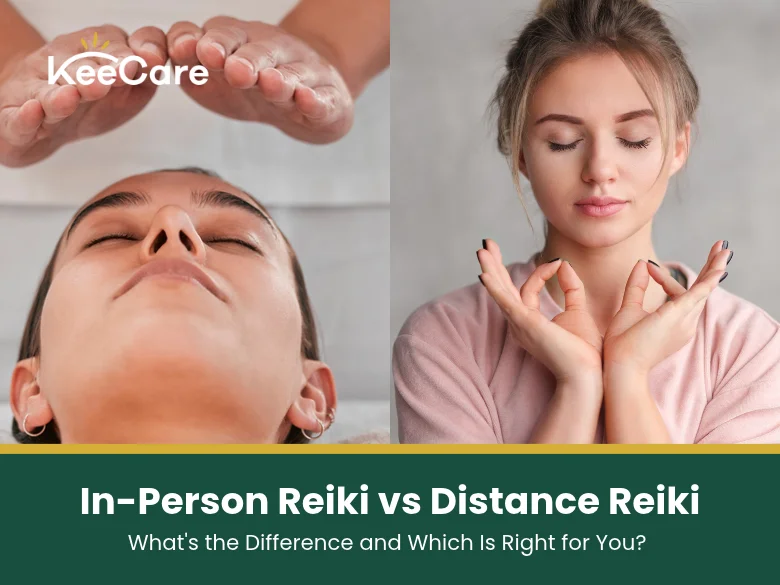
If you are exploring Reiki as a complementary wellbeing practice, one of the first practical questions you may encounter is whether to book an in-person session or explore the option of distance Reiki. The two approaches share the same underlying intention of supporting relaxation, emotional balance and general wellbeing, but the experience of each is distinct. This guide explains what sets them apart and helps you think through which may be more suitable for your situation.
Distance Reiki, sometimes called distant or remote Reiki, is rooted in the principle found within several Reiki traditions that energy is not constrained by physical location and can be directed across any distance through focused intention and specific Reiki techniques. For people who cannot easily attend a clinic, or who prefer the comfort of their own home, it offers a genuinely accessible alternative to an in-clinic appointment.
At KeeCare in Upper Norwood, London, Ravinder Singh Sahota is a Reiki Grand Master who offers both in-clinic Reiki sessions and distance Reiki where appropriate. His approach considers each client’s individual concerns and wellbeing rather than following a fixed protocol, drawing on a practice that integrates complementary and spiritual wellbeing traditions.
Key Takeaways
- In-person Reiki involves the practitioner being physically present: The practitioner works with hand positions on or near the client’s body in a clinic or therapy room, with the client lying fully clothed on a treatment couch.
- Distance Reiki uses intention rather than proximity: Based on principles within several Reiki traditions, distance Reiki is understood to allow energy to be directed to a recipient regardless of physical location, using specific techniques taught at advanced Reiki levels.
- Both approaches aim to support the same outcomes: Whether in person or at a distance, Reiki is intended to support relaxation, emotional balance and general wellbeing.
- The experience differs for many recipients: In-person sessions tend to involve a stronger felt sense of practitioner presence; distance sessions are received in the client’s own environment and may feel different in quality.
- Reiki is not a medical treatment in either format: Whether in person or remote, Reiki should be explored as a complementary wellbeing practice alongside, not instead of, appropriate conventional healthcare.
- Practical factors often guide the choice: Distance from the clinic, mobility, time constraints and personal comfort with remote approaches are common reasons people choose one format over the other.
- A practitioner’s experience matters for distance sessions: Distance Reiki requires specific training at advanced Reiki levels, so the practitioner’s qualifications and experience are relevant to both formats.
- A free consultation can help you decide: Discussing your situation with the practitioner before booking can help clarify which format may be more suitable for your current concerns and circumstances.
What is Reiki?
Reiki is a gentle, non-invasive energy-based wellbeing practice with roots in Japanese healing traditions. The word Reiki comes from two Japanese words: Rei, often translated as “universal” or “higher wisdom”, and Ki, meaning “life energy” or “vital force”. The same concept of vital energy appears in Traditional Chinese Medicine as Qi and in Indian traditions as Prana.
A Reiki session is not a medical treatment. It is a complementary wellbeing practice intended to support relaxation, emotional balance, a sense of calm and general wellbeing. The practitioner directs energy through specific hand positions, either resting lightly on the body or held just above specific areas, working through what Reiki traditions describe as a system of energy centres.
What is the difference between in-person and distance Reiki?
In-person Reiki takes place in a clinic or therapy room. The client lies comfortably, fully clothed, on a treatment couch while the practitioner works through a sequence of hand positions on or near different parts of the body. The session involves a direct, shared physical environment and the practitioner can respond in real time to what they sense or observe during the session.
Distance Reiki is received by the client in a location entirely separate from the practitioner. It is rooted in the understanding, found in several Reiki traditions including Usui Reiki at the Master level, that energy is not bound by space or time. Using specific Reiki techniques, most notably the Hon Sha Ze Sho Nen symbol, a practitioner trained in distance work is understood to direct energy across any distance through focused intention.
The concept of distance healing is a spiritual and energetic belief within Reiki tradition. It is not a scientifically established mechanism, and those exploring it should approach it as a complementary and spiritual practice rather than a medically validated intervention. That said, many people who experience distance Reiki report results that feel comparable in quality to an in-person session.
How is distance Reiki understood to work?
Within Reiki tradition, distance healing operates through two main principles: the activation of the Hon Sha Ze Sho Nen symbol and the practitioner’s focused intention. The symbol is taught at the advanced Second Degree (Okuden) and Master levels of Usui Reiki and is understood within that tradition to dissolve the barriers of space and time, allowing energy to be directed to a recipient regardless of physical location.
In practice, the distance Reiki practitioner and the client typically agree a specific time for the session. The client prepares a quiet, comfortable space at home and rests during that period. Some practitioners conduct distance sessions via a brief video call or telephone check-in at the start; others work in silent agreement, contacting the client afterwards with observations or notes from the session.
Some practitioners draw on concepts from quantum field theory or biofield science to explore why distance healing may produce felt effects for some recipients. These interpretations remain theoretical and are not established scientific consensus. What matters most for the client considering distance Reiki is whether the experience of a session feels useful, grounding and supportive to their wellbeing.
In-person Reiki vs distance Reiki: a comparison
The table below sets out the key practical differences between in-person and distance Reiki. Neither format is inherently superior; the right choice depends on your situation and personal preference.
| Aspect | In-Person Reiki | Distance Reiki |
|---|---|---|
| Location | Clinic or therapy room | Client's own home or any comfortable, private space |
| Physical contact | Light touch or hands held near the body | No physical contact; practitioner and client are in separate locations |
| Practitioner presence | Face-to-face, with direct energetic presence in the room | Practitioner works remotely using intention and Reiki techniques |
| Session format | Lying fully clothed on a treatment couch | Sitting or lying at home at an agreed time |
| Communication | Quiet space; practitioner present throughout | May include a brief check-in call or take place in silent agreement |
| Practical access | Requires travel to the clinic | Accessible regardless of location or mobility |
| Typical first choice | Often preferred for first sessions | Often preferred by existing clients or those unable to travel |
For many people, the most practical starting point is an in-person session, which allows you to meet the practitioner directly and form a sense of whether the approach resonates with you before considering future distance sessions.
Curious about which Reiki format may suit your situation?
Our team can discuss your options during a free 30-minute initial consultation.
What might you experience during an in-person Reiki session?
An in-person session at KeeCare begins with an initial consultation to discuss your concerns, any relevant health history and what you are hoping to explore. This conversation helps the practitioner understand your needs and informs how they approach the session.
You will lie comfortably, fully clothed, on a treatment couch in a calm and private room. The practitioner works through a sequence of hand positions, either resting hands lightly on the body or holding them just above specific areas, typically covering the head, neck, chest, abdomen, back and limbs. Sessions generally last between 45 and 60 minutes.
Some clients describe sensations of warmth, tingling, heaviness or a deep sense of quiet during a session. Others feel very little and find the value in the stillness and the permission to rest without an agenda. Neither response is more “correct” than the other. Reiki does not involve manipulation, massage or any invasive intervention.
What might you experience during a distance Reiki session?
For a distance Reiki session, the client does not need to attend a clinic. You would typically agree a time with the practitioner in advance, then find a comfortable place to rest or lie down at home during that period. Some people play gentle music or sit in silence; others remain lightly focused on the intention of receiving the session.
The practitioner works from their own location, using the same intention and Reiki techniques as an in-person session. Some clients report experiencing similar sensations to in-person Reiki, including warmth, a sense of deep calm or a feeling of emotional release. Others notice very little. As with in-person Reiki, responses vary and no particular response is more valid than another.
After the session, the practitioner may provide brief observations about the areas they focused on or anything they perceived during the session. This varies by practitioner and can be shared by message, email or a brief call following the session.
What to expect: in-person vs distance Reiki session stages
| Stage | In-Person Session | Distance Reiki Session |
|---|---|---|
| Before the session | Arrive at the clinic; intake consultation with the practitioner | Agree on a time; prepare a quiet, comfortable space at home |
| During the session | Lie fully clothed on a treatment couch; practitioner works at the head, torso and feet | Sit or lie in a relaxed position; practitioner works remotely using intention and Reiki techniques |
| Typical sensations | Warmth, heaviness, tingling, relaxation or quiet stillness | Similar sensations possible; some people notice less, others report comparable depth |
| Practitioner contact | Practitioner is present throughout and may adjust hand positions | Practitioner may check in briefly or work in silent agreement for the duration |
| After the session | Post-session discussion with the practitioner | Follow-up contact or notes from the practitioner where offered |
| Typical duration | 45 to 60 minutes | 30 to 60 minutes |
Would you like to understand more about what a first Reiki session at KeeCare would involve before you book?
Get in touch at keecare to arrange a free initial consultation with our team.
Who might consider in-person Reiki?
In-person Reiki is often the natural starting point for people who are approaching Reiki for the first time. The direct face-to-face encounter with the practitioner and the structure of a clinical environment can offer a sense of reassurance and support that helps first-time clients settle into the experience.
In-person sessions may also suit people who find that the physical presence of a practitioner helps them relax more fully, or those who want to combine a Reiki session with another complementary approach available at KeeCare. For example, some clients explore Reiki alongside other therapies such as colour therapy or angel healing as part of a personalised wellbeing plan.
For clients in South London, including Crystal Palace, West Norwood, Dulwich, Croydon or Streatham, travelling to the clinic in Upper Norwood is straightforward and allows for the full range of in-clinic services.
Who might consider distance Reiki?
Distance Reiki may be particularly suitable for people who have already experienced in-person Reiki and are open to exploring how the energy work feels in a remote format. Without the need to travel, it can also be an accessible option for people whose mobility, health or caring responsibilities make regular clinic visits difficult.
Some clients who live outside South London choose distance Reiki because they cannot easily reach KeeCare’s clinic in person. Others simply prefer the familiarity and comfort of their own home environment and find that the absence of travel or a clinical setting allows them to relax more easily into the session.
Distance Reiki is not a reduced or inferior form of the practice. Many experienced Reiki practitioners and recipients consider it simply a different vehicle for the same intention and care, and some clients prefer it over time.
Can distance Reiki be as effective as in-person Reiki?
This is one of the most frequently asked questions, and it deserves an honest answer. The straightforward position is that individual experiences of both formats vary considerably, and there is no robust clinical evidence establishing that either form of Reiki produces measurable therapeutic effects for specific medical conditions.
What some people report is that the experience of a well-conducted distance session can feel comparable in depth and quality to an in-person session. Others find the in-person contact integral to their experience of relaxation and are less drawn to the remote format. Neither preference is more valid than the other, and both are entirely reasonable responses.
What matters is that any Reiki session, whether in person or at a distance, is approached as a complementary wellbeing practice, not as a medical intervention. If you are experiencing health concerns that need attention, those concerns should be assessed by a qualified healthcare professional. Reiki may then be explored alongside appropriate care as a source of relaxation, emotional support and general wellbeing.
What does the evidence say about Reiki?
Reiki has been the subject of a growing number of clinical studies, particularly in relation to relaxation, anxiety and its use as complementary support in palliative and cancer care settings. The evidence base, however, remains limited. Studies examining Reiki have generally been small in scale, varied in method and difficult to compare directly. As a result, drawing firm conclusions about its effectiveness for specific conditions is not currently possible.
The NHS does not recommend Reiki as a treatment for any specific medical condition. Some NHS trusts and hospices have made Reiki available as an optional complementary support for patients receiving conventional treatment, particularly where relaxation and emotional comfort are priorities. Its use in these settings reflects recognition that some patients find it beneficial to their sense of wellbeing, not that its efficacy has been clinically established.
There is no meaningful clinical research specifically comparing the effectiveness of in-person Reiki with distance Reiki. Both formats lack the kind of large-scale, well-controlled trials that would be needed to establish a clear difference. What many recipients report is that the quality of the practitioner’s experience and intention plays a significant role in the felt experience of either format.
Reiki in Upper Norwood and South London
KeeCare is based at 98 Beulah Hill, Upper Norwood, London SE19 3XR, and welcomes clients from across South London seeking complementary and holistic wellbeing support. Clients travel to the clinic from Crystal Palace, Croydon, Dulwich, West Norwood, Streatham, Thornton Heath, Norbury and South Norwood.
Reiki sessions at KeeCare are delivered by Ravinder Singh Sahota, a Reiki Grand Master whose practice integrates complementary and spiritual wellbeing traditions and considers each client’s individual concerns. Both in-clinic and distance Reiki sessions are available. KeeCare also offers auricular acupuncture, colour therapy and angel healing as complementary approaches that may be explored individually or, where appropriate, as part of a personalised wellbeing plan.
A free 30-minute initial consultation is available for new clients, providing an opportunity to discuss your situation, ask questions about either Reiki format and decide how you would like to proceed before committing to a session.
Frequently Asked Questions
Yes. Distance Reiki does not require prior in-person experience. Many people explore it as their first Reiki session. That said, some find it helpful to have one in-person session first to gain a felt sense of what Reiki involves, though this is a personal preference rather than a requirement. Discussing your situation with the practitioner before booking can help you decide.
You simply need to be in a quiet, comfortable position at the agreed time, ideally lying or sitting in a relaxed posture in a space where you will not be disturbed. Some people play gentle music; others prefer silence. There is no specific action required on your part during the session. Your practitioner will guide you through what to expect beforehand.
Reiki is a gentle, non-invasive practice that does not involve manipulation, massage or any clinical procedure. Most people experience no adverse effects. Some feel temporarily tired or emotional after a session, which generally settles within a few hours. If you have a serious health condition, it is good practice to let your GP know you are exploring complementary therapy, though Reiki is not a medical treatment and no referral is needed to book.
The main practical difference is location. In-person Reiki involves the practitioner physically present in the room, working with hand positions on or near your body. Distance Reiki is received at home at an agreed time, with the practitioner working from a separate location using intention and Reiki techniques. The intended purpose of both is the same, though the felt quality of the experience can differ between individuals.
There is no set number. Many people choose to begin with a single session to see how they respond, then decide whether to continue. Others prefer a small course of sessions over several weeks. The practitioner can discuss what may be appropriate based on your situation during an initial consultation.
Reiki does not require belief in any particular spiritual or religious framework. Some people explore it from a practical wellbeing perspective and find it helpful for relaxation, regardless of any spiritual dimension. The absence of belief is not understood within Reiki traditions to prevent the energy work from taking place, though as with all complementary approaches, individual responses vary.
Reiki is a complementary approach and is generally explored alongside conventional medical treatment rather than instead of it. It is not a substitute for any prescribed treatment or clinical care. If you are undergoing treatment for a serious condition, it is advisable to let your healthcare team know you are considering complementary therapy. KeeCare’s practitioner will ask about your health background at the initial consultation.
Yes. KeeCare offers both in-clinic Reiki sessions at its Upper Norwood clinic and distance Reiki where appropriate. A free 30-minute initial consultation is available to discuss which format may be more suitable for your situation, what to expect from a first session, and any questions you have before you decide.