
In-Person Reiki vs Distance Reiki: What’s the Difference and Which Is Right for You?
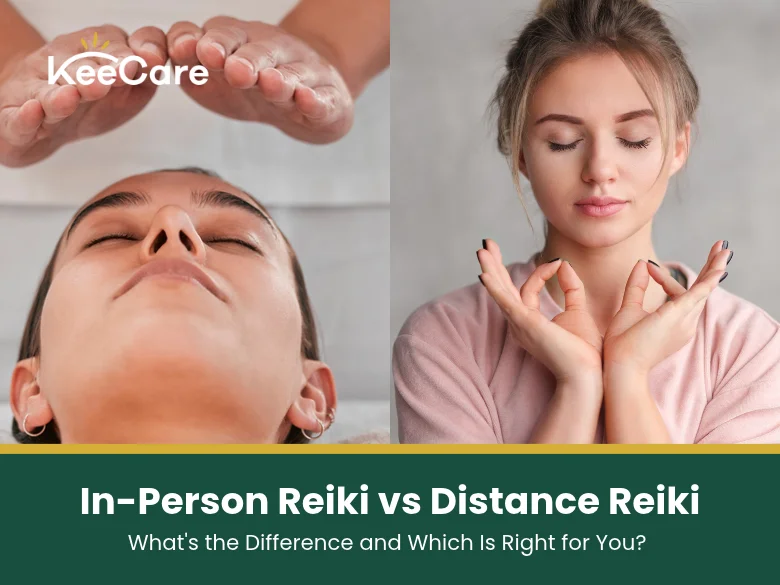
Home In-Person Reiki vs Distance Reiki: What’s the Difference and Which Is Right for You? ByRavinder Singh Sahota November 23, 2026 If you are exploring Reiki as a complementary wellbeing practice, one of the first practical questions you may encounter is whether to book an in-person session or explore the option of distance Reiki. The two approaches share the same underlying intention of supporting relaxation, emotional balance and general wellbeing, but the experience of each is distinct. This guide explains what sets them apart and helps you think through which may be more suitable for your situation. Distance Reiki, sometimes called distant or remote Reiki, is rooted in the principle found within several Reiki traditions that energy is not constrained by physical location and can be directed across any distance through focused intention and specific Reiki techniques. For people who cannot easily attend a clinic, or who prefer the comfort of their own home, it offers a genuinely accessible alternative to an in-clinic appointment. At KeeCare in Upper Norwood, London, Ravinder Singh Sahota is a Reiki Grand Master who offers both in-clinic Reiki sessions and distance Reiki where appropriate. His approach considers each client’s individual concerns and wellbeing rather than following a fixed protocol, drawing on a practice that integrates complementary and spiritual wellbeing traditions. Key Takeaways In-person Reiki involves the practitioner being physically present: The practitioner works with hand positions on or near the client’s body in a clinic or therapy room, with the client lying fully clothed on a treatment couch. Distance Reiki uses intention rather than proximity: Based on principles within several Reiki traditions, distance Reiki is understood to allow energy to be directed to a recipient regardless of physical location, using specific techniques taught at advanced Reiki levels. Both approaches aim to support the same outcomes: Whether in person or at a distance, Reiki is intended to support relaxation, emotional balance and general wellbeing. The experience differs for many recipients: In-person sessions tend to involve a stronger felt sense of practitioner presence; distance sessions are received in the client’s own environment and may feel different in quality. Reiki is not a medical treatment in either format: Whether in person or remote, Reiki should be explored as a complementary wellbeing practice alongside, not instead of, appropriate conventional healthcare. Practical factors often guide the choice: Distance from the clinic, mobility, time constraints and personal comfort with remote approaches are common reasons people choose one format over the other. A practitioner’s experience matters for distance sessions: Distance Reiki requires specific training at advanced Reiki levels, so the practitioner’s qualifications and experience are relevant to both formats. A free consultation can help you decide: Discussing your situation with the practitioner before booking can help clarify which format may be more suitable for your current concerns and circumstances. What is Reiki? Reiki is a gentle, non-invasive energy-based wellbeing practice with roots in Japanese healing traditions. The word Reiki comes from two Japanese words: Rei, often translated as “universal” or “higher wisdom”, and Ki, meaning “life energy” or “vital force”. The same concept of vital energy appears in Traditional Chinese Medicine as Qi and in Indian traditions as Prana. A Reiki session is not a medical treatment. It is a complementary wellbeing practice intended to support relaxation, emotional balance, a sense of calm and general wellbeing. The practitioner directs energy through specific hand positions, either resting lightly on the body or held just above specific areas, working through what Reiki traditions describe as a system of energy centres. What is the difference between in-person and distance Reiki? In-person Reiki takes place in a clinic or therapy room. The client lies comfortably, fully clothed, on a treatment couch while the practitioner works through a sequence of hand positions on or near different parts of the body. The session involves a direct, shared physical environment and the practitioner can respond in real time to what they sense or observe during the session. Distance Reiki is received by the client in a location entirely separate from the practitioner. It is rooted in the understanding, found in several Reiki traditions including Usui Reiki at the Master level, that energy is not bound by space or time. Using specific Reiki techniques, most notably the Hon Sha Ze Sho Nen symbol, a practitioner trained in distance work is understood to direct energy across any distance through focused intention. The concept of distance healing is a spiritual and energetic belief within Reiki tradition. It is not a scientifically established mechanism, and those exploring it should approach it as a complementary and spiritual practice rather than a medically validated intervention. That said, many people who experience distance Reiki report results that feel comparable in quality to an in-person session. How is distance Reiki understood to work? Within Reiki tradition, distance healing operates through two main principles: the activation of the Hon Sha Ze Sho Nen symbol and the practitioner’s focused intention. The symbol is taught at the advanced Second Degree (Okuden) and Master levels of Usui Reiki and is understood within that tradition to dissolve the barriers of space and time, allowing energy to be directed to a recipient regardless of physical location. In practice, the distance Reiki practitioner and the client typically agree a specific time for the session. The client prepares a quiet, comfortable space at home and rests during that period. Some practitioners conduct distance sessions via a brief video call or telephone check-in at the start; others work in silent agreement, contacting the client afterwards with observations or notes from the session. Some practitioners draw on concepts from quantum field theory or biofield science to explore why distance healing may produce felt effects for some recipients. These interpretations remain theoretical and are not established scientific consensus. What matters most for the client considering distance Reiki is whether the experience of a session feels useful, grounding and supportive to their wellbeing. In-person Reiki vs distance Reiki: a comparison The table below sets out the key practical